
Stress and Female Fertility
Shop through our latest selection of Fashion
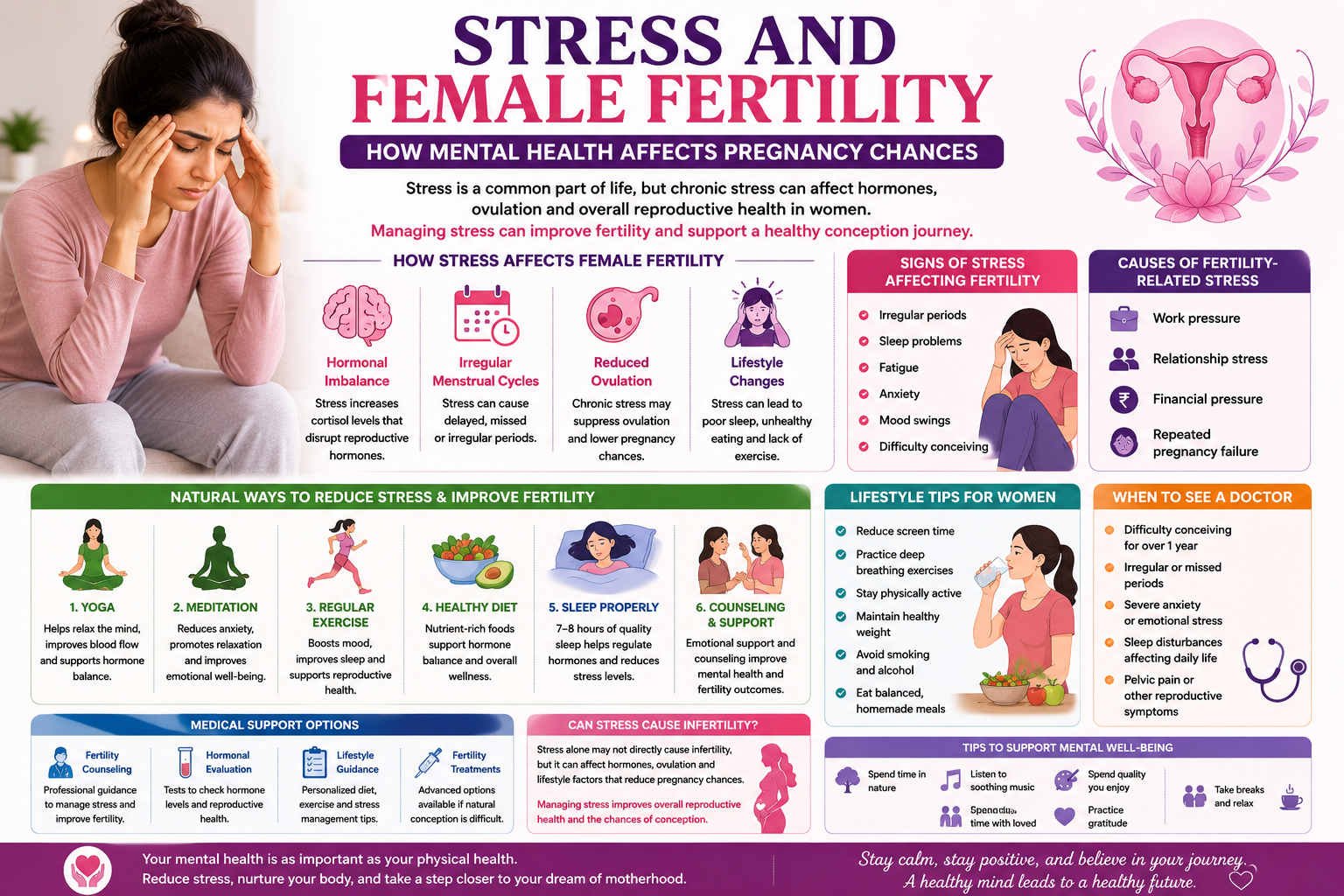
Stress and Female Fertility
Stress and Female Fertility: How Mental Health Affects Pregnancy Chances
Introduction
Stress has become a common part of modern life. Work pressure, family responsibilities, financial concerns, relationship challenges, and fertility struggles can all contribute to emotional stress. While occasional stress is normal, long-term or chronic stress can affect overall health, including female fertility.
Many women trying to conceive focus only on physical factors such as ovulation, hormones, and reproductive health but often overlook the role of mental well-being. Research suggests that emotional health and fertility are closely connected. Chronic stress may interfere with reproductive hormones, menstrual cycles, and ovulation, reducing the chances of pregnancy.
Understanding the connection between stress and fertility can help women take proactive steps to improve reproductive health and support a healthy conception journey.
What is Stress?
Stress is the body’s natural response to physical, emotional, or mental pressure.
When the body experiences stress, it releases hormones such as:
Cortisol
Adrenaline
These hormones help the body react to challenging situations. However, when stress becomes chronic, high cortisol levels may affect other body systems, including the reproductive system.
Long-term stress may disrupt hormone balance and negatively impact fertility.
How Stress Affects Female Fertility
Stress affects fertility through multiple pathways.
1. Hormonal Imbalance
Chronic stress increases cortisol production.
High cortisol levels may interfere with reproductive hormones responsible for:
Ovulation
Menstrual cycle regulation
Egg release
Implantation
Hormonal imbalance can reduce pregnancy chances.
2. Irregular Menstrual Cycles
Women under emotional stress often experience menstrual changes.
Common issues include:
Delayed periods
Missed periods
Short cycles
Long cycles
Irregular ovulation
When ovulation becomes irregular, conception may become difficult.
3. Reduced Ovulation
Stress affects communication between the brain and reproductive organs.
Long-term stress may suppress ovulation or delay egg release.
Without regular ovulation, pregnancy chances decrease.
4. Lifestyle Changes Caused by Stress
Stress often leads to unhealthy habits such as:
Poor sleep
Emotional eating
Lack of exercise
Excess caffeine intake
Smoking or alcohol use
These lifestyle changes may indirectly affect fertility.
Common Signs of Stress Affecting Fertility
Stress may affect reproductive health in subtle ways.
Common signs include:
Irregular menstrual cycles
Sleep problems
Constant fatigue
Mood swings
Anxiety
Headaches
Difficulty concentrating
Reduced libido
Difficulty conceiving
Women experiencing these symptoms while trying to conceive should consider emotional wellness as part of fertility care.
Causes of Fertility-Related Stress
Many emotional and lifestyle factors contribute to stress.
1. Work Pressure
Long working hours, deadlines, and mental exhaustion increase stress levels.
Work-related stress may affect sleep and hormone balance.
2. Relationship Stress
Emotional conflicts and communication issues may increase anxiety.
Strong emotional support is important during fertility planning.
3. Financial Pressure
Fertility treatments and medical costs can create emotional burden.
Financial stress may affect mental health significantly.
4. Repeated Pregnancy Failure
Past miscarriages, failed IVF cycles, or infertility experiences may increase emotional stress.
Women often experience fear and uncertainty after pregnancy loss.
5. Social Pressure
Questions about pregnancy from family or society may increase emotional pressure.
This stress may affect confidence and mental well-being.
Can Stress Cause Infertility?
Stress alone may not directly cause infertility.
However, chronic stress may contribute to:
Hormonal imbalance
Ovulation issues
Irregular periods
Reduced sexual desire
Poor lifestyle habits
These factors may reduce pregnancy chances.
Managing stress supports better reproductive health and overall well-being.
How Mental Health Impacts Fertility Treatment Success
Women undergoing fertility treatments often experience emotional pressure.
Stress during fertility treatments may affect:
Treatment adherence
Sleep quality
Emotional stability
Lifestyle habits
Mental wellness support may improve treatment experience and overall reproductive health.
Natural Ways to Reduce Stress and Improve Fertility
Healthy lifestyle habits can help reduce stress naturally.
1. Practice Yoga
Yoga supports relaxation and hormone balance.
Benefits include:
Reduced cortisol levels
Improved blood circulation
Better emotional control
Enhanced reproductive health
Fertility yoga is becoming increasingly popular among women trying to conceive.
2. Meditation
Meditation helps calm the mind and reduce anxiety.
Regular meditation may improve:
Emotional well-being
Sleep quality
Hormonal balance
Stress management
Even 10–15 minutes daily can help.
3. Exercise Regularly
Moderate exercise improves mood and fertility.
Recommended activities:
Walking
Swimming
Stretching
Cycling
Light workouts
Exercise releases endorphins, which improve emotional health.
Avoid excessive exercise because it may affect ovulation.
4. Follow a Healthy Diet
Nutrition affects both fertility and mental health.
Include:
Fruits
Vegetables
Whole grains
Nuts and seeds
Healthy fats
Protein-rich foods
Avoid excessive processed foods and sugar.
5. Sleep Properly
Sleep is essential for hormone regulation.
Poor sleep may increase cortisol levels.
Aim for:
7–8 hours daily
Consistent sleep schedule
Quality sleep supports reproductive hormones.
6. Counseling and Emotional Support
Emotional support is important during fertility challenges.
Women may benefit from:
Fertility counseling
Support groups
Therapy sessions
Open communication with partners
Mental health support improves emotional resilience.
Best Lifestyle Tips for Women Trying to Conceive
Women planning pregnancy can improve fertility by:
Reducing screen time
Practicing breathing exercises
Staying physically active
Maintaining healthy weight
Avoiding smoking and alcohol
Limiting caffeine intake
Staying hydrated
Creating a balanced daily routine
Small changes can make a significant difference.
Medical Support Options
Doctors may recommend medical evaluation if stress affects fertility.
Possible support options include:
1. Fertility Counseling
Helps manage emotional challenges during conception.
2. Hormonal Evaluation
Doctors may check:
Thyroid hormones
Reproductive hormones
Ovulation health
3. Lifestyle Guidance
Specialists may recommend nutrition and stress management plans.
4. Fertility Treatments
If pregnancy remains difficult, treatments may include:
Ovulation induction
IUI
IVF
Treatment depends on individual fertility factors.
Emotional Impact of Infertility and Stress
Infertility itself can become a source of stress.
Women may experience:
Anxiety
Depression
Frustration
Emotional exhaustion
Loss of confidence
Mental health deserves equal attention during fertility treatment.
Seeking support is a sign of strength.
When to See a Doctor
Consult a doctor if you experience:
Difficulty conceiving for over 1 year
Irregular menstrual cycles
Severe anxiety or emotional stress
Sleep disturbances
Chronic fatigue
Repeated pregnancy loss
Early support improves fertility outcomes.
FAQs About Stress and Fertility
1. Can stress delay pregnancy?
Yes, chronic stress may affect ovulation and menstrual cycles.
2. Does stress stop ovulation?
Severe stress may temporarily suppress ovulation in some women.
3. Can reducing stress improve fertility?
Managing stress supports hormonal balance and reproductive health.
4. Is counseling helpful during fertility treatment?
Yes, counseling improves emotional well-being and coping ability.
Conclusion
Stress and fertility are closely connected. While stress may not always directly cause infertility, it can influence hormones, ovulation, menstrual cycles, and overall reproductive health.
Managing stress through yoga, meditation, healthy lifestyle habits, emotional support, and medical guidance can help women improve fertility naturally.
Taking care of mental health is an important step in every fertility journey. A healthy mind supports a healthy body, improving the chances of successful conception and pregnancy.
Introduction
Stress has become a common part of modern life. Work pressure, family responsibilities, financial concerns, relationship challenges, and fertility struggles can all contribute to emotional stress. While occasional stress is normal, long-term or chronic stress can affect overall health, including female fertility.
Many women trying to conceive focus only on physical factors such as ovulation, hormones, and reproductive health but often overlook the role of mental well-being. Research suggests that emotional health and fertility are closely connected. Chronic stress may interfere with reproductive hormones, menstrual cycles, and ovulation, reducing the chances of pregnancy.
Understanding the connection between stress and fertility can help women take proactive steps to improve reproductive health and support a healthy conception journey.
What is Stress?
Stress is the body’s natural response to physical, emotional, or mental pressure.
When the body experiences stress, it releases hormones such as:
Cortisol
Adrenaline
These hormones help the body react to challenging situations. However, when stress becomes chronic, high cortisol levels may affect other body systems, including the reproductive system.
Long-term stress may disrupt hormone balance and negatively impact fertility.
How Stress Affects Female Fertility
Stress affects fertility through multiple pathways.
1. Hormonal Imbalance
Chronic stress increases cortisol production.
High cortisol levels may interfere with reproductive hormones responsible for:
Ovulation
Menstrual cycle regulation
Egg release
Implantation
Hormonal imbalance can reduce pregnancy chances.
2. Irregular Menstrual Cycles
Women under emotional stress often experience menstrual changes.
Common issues include:
Delayed periods
Missed periods
Short cycles
Long cycles
Irregular ovulation
When ovulation becomes irregular, conception may become difficult.
3. Reduced Ovulation
Stress affects communication between the brain and reproductive organs.
Long-term stress may suppress ovulation or delay egg release.
Without regular ovulation, pregnancy chances decrease.
4. Lifestyle Changes Caused by Stress
Stress often leads to unhealthy habits such as:
Poor sleep
Emotional eating
Lack of exercise
Excess caffeine intake
Smoking or alcohol use
These lifestyle changes may indirectly affect fertility.
Common Signs of Stress Affecting Fertility
Stress may affect reproductive health in subtle ways.
Common signs include:
Irregular menstrual cycles
Sleep problems
Constant fatigue
Mood swings
Anxiety
Headaches
Difficulty concentrating
Reduced libido
Difficulty conceiving
Women experiencing these symptoms while trying to conceive should consider emotional wellness as part of fertility care.
Causes of Fertility-Related Stress
Many emotional and lifestyle factors contribute to stress.
1. Work Pressure
Long working hours, deadlines, and mental exhaustion increase stress levels.
Work-related stress may affect sleep and hormone balance.
2. Relationship Stress
Emotional conflicts and communication issues may increase anxiety.
Strong emotional support is important during fertility planning.
3. Financial Pressure
Fertility treatments and medical costs can create emotional burden.
Financial stress may affect mental health significantly.
4. Repeated Pregnancy Failure
Past miscarriages, failed IVF cycles, or infertility experiences may increase emotional stress.
Women often experience fear and uncertainty after pregnancy loss.
5. Social Pressure
Questions about pregnancy from family or society may increase emotional pressure.
This stress may affect confidence and mental well-being.
Can Stress Cause Infertility?
Stress alone may not directly cause infertility.
However, chronic stress may contribute to:
Hormonal imbalance
Ovulation issues
Irregular periods
Reduced sexual desire
Poor lifestyle habits
These factors may reduce pregnancy chances.
Managing stress supports better reproductive health and overall well-being.
How Mental Health Impacts Fertility Treatment Success
Women undergoing fertility treatments often experience emotional pressure.
Stress during fertility treatments may affect:
Treatment adherence
Sleep quality
Emotional stability
Lifestyle habits
Mental wellness support may improve treatment experience and overall reproductive health.
Natural Ways to Reduce Stress and Improve Fertility
Healthy lifestyle habits can help reduce stress naturally.
1. Practice Yoga
Yoga supports relaxation and hormone balance.
Benefits include:
Reduced cortisol levels
Improved blood circulation
Better emotional control
Enhanced reproductive health
Fertility yoga is becoming increasingly popular among women trying to conceive.
2. Meditation
Meditation helps calm the mind and reduce anxiety.
Regular meditation may improve:
Emotional well-being
Sleep quality
Hormonal balance
Stress management
Even 10–15 minutes daily can help.
3. Exercise Regularly
Moderate exercise improves mood and fertility.
Recommended activities:
Walking
Swimming
Stretching
Cycling
Light workouts
Exercise releases endorphins, which improve emotional health.
Avoid excessive exercise because it may affect ovulation.
4. Follow a Healthy Diet
Nutrition affects both fertility and mental health.
Include:
Fruits
Vegetables
Whole grains
Nuts and seeds
Healthy fats
Protein-rich foods
Avoid excessive processed foods and sugar.
5. Sleep Properly
Sleep is essential for hormone regulation.
Poor sleep may increase cortisol levels.
Aim for:
7–8 hours daily
Consistent sleep schedule
Quality sleep supports reproductive hormones.
6. Counseling and Emotional Support
Emotional support is important during fertility challenges.
Women may benefit from:
Fertility counseling
Support groups
Therapy sessions
Open communication with partners
Mental health support improves emotional resilience.
Best Lifestyle Tips for Women Trying to Conceive
Women planning pregnancy can improve fertility by:
Reducing screen time
Practicing breathing exercises
Staying physically active
Maintaining healthy weight
Avoiding smoking and alcohol
Limiting caffeine intake
Staying hydrated
Creating a balanced daily routine
Small changes can make a significant difference.
Medical Support Options
Doctors may recommend medical evaluation if stress affects fertility.
Possible support options include:
1. Fertility Counseling
Helps manage emotional challenges during conception.
2. Hormonal Evaluation
Doctors may check:
Thyroid hormones
Reproductive hormones
Ovulation health
3. Lifestyle Guidance
Specialists may recommend nutrition and stress management plans.
4. Fertility Treatments
If pregnancy remains difficult, treatments may include:
Ovulation induction
IUI
IVF
Treatment depends on individual fertility factors.
Emotional Impact of Infertility and Stress
Infertility itself can become a source of stress.
Women may experience:
Anxiety
Depression
Frustration
Emotional exhaustion
Loss of confidence
Mental health deserves equal attention during fertility treatment.
Seeking support is a sign of strength.
When to See a Doctor
Consult a doctor if you experience:
Difficulty conceiving for over 1 year
Irregular menstrual cycles
Severe anxiety or emotional stress
Sleep disturbances
Chronic fatigue
Repeated pregnancy loss
Early support improves fertility outcomes.
FAQs About Stress and Fertility
1. Can stress delay pregnancy?
Yes, chronic stress may affect ovulation and menstrual cycles.
2. Does stress stop ovulation?
Severe stress may temporarily suppress ovulation in some women.
3. Can reducing stress improve fertility?
Managing stress supports hormonal balance and reproductive health.
4. Is counseling helpful during fertility treatment?
Yes, counseling improves emotional well-being and coping ability.
Conclusion
Stress and fertility are closely connected. While stress may not always directly cause infertility, it can influence hormones, ovulation, menstrual cycles, and overall reproductive health.
Managing stress through yoga, meditation, healthy lifestyle habits, emotional support, and medical guidance can help women improve fertility naturally.
Taking care of mental health is an important step in every fertility journey. A healthy mind supports a healthy body, improving the chances of successful conception and pregnancy.