
Pre-Pregnancy Health Checklist Every Woman Should Follow
Shop through our latest selection of Fashion
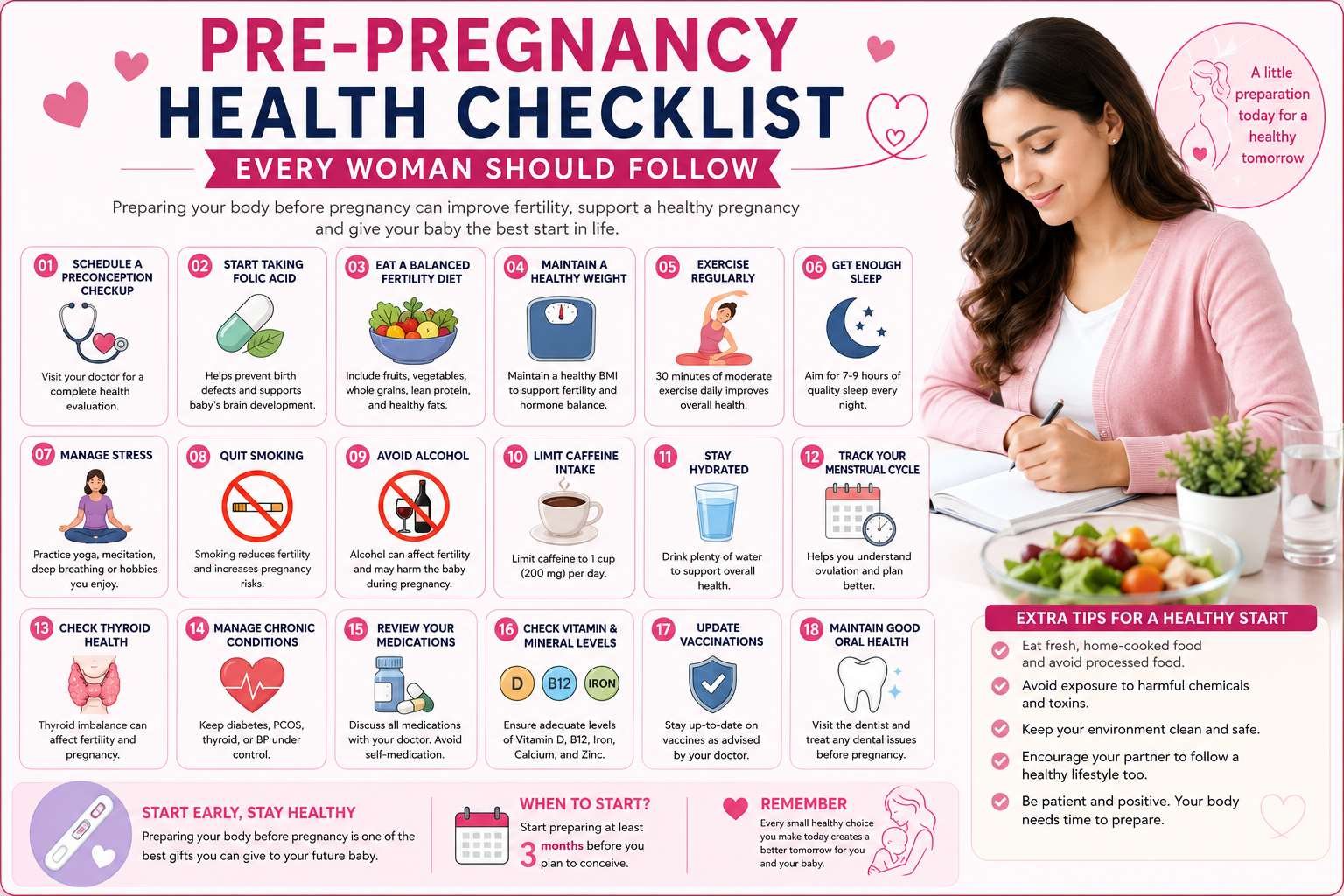
Pre-Pregnancy Health Checklist Every Woman Should Follow
Pre-Pregnancy Health Checklist Every Woman Should Follow: A Complete Guide for a Healthy Pregnancy
Introduction
Planning a pregnancy is one of the most important decisions in a woman's life. While many people focus on health after pregnancy begins, experts recommend preparing your body at least 3 months before conception. Good pre-pregnancy health can improve fertility, support fetal development, and reduce the risk of pregnancy complications.
A healthy lifestyle, balanced nutrition, regular exercise, and proper medical care can help create the best environment for conception and a healthy pregnancy. This pre-pregnancy health checklist covers everything women should know before trying to conceive.
What Is Pre-Pregnancy Health?
Pre-pregnancy health, also called preconception health, refers to improving your physical and mental well-being before becoming pregnant.
It includes:
Healthy eating habits
Regular exercise
Medical checkups
Vitamin supplementation
Weight management
Stress reduction
Avoiding harmful substances
Preparing your body early can increase the chances of a healthy pregnancy and baby.
Why Is Pre-Pregnancy Care Important?
Good pre-pregnancy care may help:
Support healthy ovulation
Improve fertility
Reduce pregnancy complications
Support fetal growth and development
Lower the risk of birth defects
Improve maternal health
Women who prepare before pregnancy often experience healthier pregnancies overall.
1. Schedule a Preconception Checkup
Before trying to conceive, visit your healthcare provider for a complete health evaluation.
The doctor may review:
Medical history
Family history
Current medications
Vaccination status
Menstrual cycle history
Existing medical conditions
Early evaluation helps identify potential issues that may affect pregnancy.
2. Start Taking Folic Acid
Folic acid is one of the most important nutrients before pregnancy.
It supports:
Brain development
Spinal cord development
Healthy fetal growth
Health professionals often recommend taking folic acid before conception and during early pregnancy to reduce the risk of neural tube defects.
Always follow your healthcare provider's advice regarding supplementation.
3. Eat a Balanced Fertility-Friendly Diet
Nutrition plays a major role in reproductive health.
Include:
Fresh fruits
Green vegetables
Whole grains
Lean proteins
Healthy fats
Dairy products
Nuts and seeds
A nutrient-rich diet supports hormone balance and overall wellness.
4. Maintain a Healthy Weight
Body weight influences fertility and pregnancy outcomes.
Being overweight or underweight may interfere with ovulation and hormone balance.
Maintaining a healthy BMI through proper nutrition and physical activity supports reproductive health.
5. Exercise Regularly
Regular exercise improves circulation, metabolism, and hormone regulation.
Recommended activities include:
Walking
Swimming
Yoga
Cycling
Light strength training
Moderate exercise supports fertility and overall health.
6. Get Enough Sleep
Sleep is essential for hormone production and reproductive health.
Aim for 7–9 hours of quality sleep every night.
Poor sleep may contribute to hormonal imbalance and reduced fertility.
7. Manage Stress
Long-term stress may affect reproductive hormones and menstrual cycles.
Healthy stress management techniques include:
Meditation
Yoga
Deep breathing
Reading
Spending time outdoors
Mental well-being is an important part of pregnancy preparation.
8. Quit Smoking
Smoking has been linked with reduced fertility and pregnancy complications.
It may affect:
Egg quality
Ovarian reserve
Hormone function
Quitting smoking before pregnancy supports reproductive health.
9. Avoid Alcohol
Alcohol may interfere with fertility and fetal development.
Women planning pregnancy should discuss alcohol use with their healthcare provider and follow medical guidance.
10. Limit Caffeine Intake
Excessive caffeine consumption may affect pregnancy planning for some women.
Moderation is generally recommended while trying to conceive.
Consult your healthcare provider regarding safe intake.
11. Stay Hydrated
Water supports:
Hormone transport
Blood circulation
Cell function
Overall metabolism
Drink enough water daily to maintain hydration and overall health.
12. Track Your Menstrual Cycle
Understanding your menstrual cycle helps identify fertile days.
Track:
Period dates
Ovulation
Cycle length
Symptoms
Ovulation tracking may improve pregnancy planning.
13. Check Thyroid Health
Thyroid hormones play an important role in fertility and pregnancy.
Women with symptoms of thyroid disease should undergo evaluation before conception.
Proper thyroid management supports reproductive health.
14. Manage Chronic Health Conditions
Conditions that should be controlled before pregnancy include:
Diabetes
Hypertension
Thyroid disorders
PCOS
Autoimmune diseases
Well-managed health conditions reduce pregnancy risks.
15. Review Current Medications
Some medicines may not be suitable during pregnancy.
Never stop medications without medical advice.
Your doctor can recommend pregnancy-safe alternatives if necessary.
16. Check Vitamin and Mineral Levels
Important nutrients include:
Vitamin D
Iron
Calcium
Vitamin B12
Zinc
Omega-3 fatty acids
Deficiencies should be corrected under medical supervision.
17. Update Vaccinations
Certain infections during pregnancy can harm both mother and baby.
Your healthcare provider may recommend updating vaccinations before conception if needed.
18. Improve Gut Health
A healthy digestive system supports nutrient absorption and immune function.
Eat:
Yogurt
Fiber-rich foods
Fruits
Vegetables
Whole grains
Gut health contributes to overall wellness.
19. Maintain Good Oral Health
Dental infections may affect pregnancy outcomes.
Visit a dentist before pregnancy for cleaning and treatment if necessary.
Good oral hygiene supports overall health.
20. Reduce Exposure to Harmful Chemicals
Try to minimize exposure to:
Tobacco smoke
Pesticides
Industrial chemicals
Air pollution
Certain household toxins
A healthy environment supports reproductive health.
21. Encourage Your Partner to Stay Healthy
Male fertility also contributes to successful conception.
Healthy habits for partners include:
Balanced diet
Exercise
Healthy weight
No smoking
Limited alcohol
Adequate sleep
Pregnancy planning is a shared responsibility.
Sample Daily Pre-Pregnancy Routine
Wake up early
Drink water
Eat a nutritious breakfast
Exercise for 30 minutes
Eat balanced meals
Stay hydrated
Practice stress management
Sleep 7–9 hours
Consistency supports overall health and fertility.
Common Mistakes to Avoid Before Pregnancy
Skipping medical checkups
Smoking
Heavy alcohol use
Poor nutrition
Crash dieting
Sleep deprivation
Ignoring chronic illnesses
Self-medicating
Avoiding these habits may support a healthier pregnancy journey.
When Should You Start Preparing for Pregnancy?
Experts generally recommend beginning pregnancy preparation at least three months before trying to conceive. This allows time to improve nutrition, lifestyle habits, and overall health.
Women with chronic medical conditions may benefit from even earlier planning.
Conclusion
Preparing your body before pregnancy is one of the best steps you can take for your future baby's health and your own well-being. A healthy diet, regular exercise, quality sleep, stress management, routine medical checkups, and proper nutrition all contribute to a healthier pregnancy journey.
Following this pre-pregnancy health checklist can help optimize reproductive health and prepare your body for conception. If you have medical concerns or fertility issues, consult a qualified healthcare professional for personalized guidance before trying to conceive.
Introduction
Planning a pregnancy is one of the most important decisions in a woman's life. While many people focus on health after pregnancy begins, experts recommend preparing your body at least 3 months before conception. Good pre-pregnancy health can improve fertility, support fetal development, and reduce the risk of pregnancy complications.
A healthy lifestyle, balanced nutrition, regular exercise, and proper medical care can help create the best environment for conception and a healthy pregnancy. This pre-pregnancy health checklist covers everything women should know before trying to conceive.
What Is Pre-Pregnancy Health?
Pre-pregnancy health, also called preconception health, refers to improving your physical and mental well-being before becoming pregnant.
It includes:
Healthy eating habits
Regular exercise
Medical checkups
Vitamin supplementation
Weight management
Stress reduction
Avoiding harmful substances
Preparing your body early can increase the chances of a healthy pregnancy and baby.
Why Is Pre-Pregnancy Care Important?
Good pre-pregnancy care may help:
Support healthy ovulation
Improve fertility
Reduce pregnancy complications
Support fetal growth and development
Lower the risk of birth defects
Improve maternal health
Women who prepare before pregnancy often experience healthier pregnancies overall.
1. Schedule a Preconception Checkup
Before trying to conceive, visit your healthcare provider for a complete health evaluation.
The doctor may review:
Medical history
Family history
Current medications
Vaccination status
Menstrual cycle history
Existing medical conditions
Early evaluation helps identify potential issues that may affect pregnancy.
2. Start Taking Folic Acid
Folic acid is one of the most important nutrients before pregnancy.
It supports:
Brain development
Spinal cord development
Healthy fetal growth
Health professionals often recommend taking folic acid before conception and during early pregnancy to reduce the risk of neural tube defects.
Always follow your healthcare provider's advice regarding supplementation.
3. Eat a Balanced Fertility-Friendly Diet
Nutrition plays a major role in reproductive health.
Include:
Fresh fruits
Green vegetables
Whole grains
Lean proteins
Healthy fats
Dairy products
Nuts and seeds
A nutrient-rich diet supports hormone balance and overall wellness.
4. Maintain a Healthy Weight
Body weight influences fertility and pregnancy outcomes.
Being overweight or underweight may interfere with ovulation and hormone balance.
Maintaining a healthy BMI through proper nutrition and physical activity supports reproductive health.
5. Exercise Regularly
Regular exercise improves circulation, metabolism, and hormone regulation.
Recommended activities include:
Walking
Swimming
Yoga
Cycling
Light strength training
Moderate exercise supports fertility and overall health.
6. Get Enough Sleep
Sleep is essential for hormone production and reproductive health.
Aim for 7–9 hours of quality sleep every night.
Poor sleep may contribute to hormonal imbalance and reduced fertility.
7. Manage Stress
Long-term stress may affect reproductive hormones and menstrual cycles.
Healthy stress management techniques include:
Meditation
Yoga
Deep breathing
Reading
Spending time outdoors
Mental well-being is an important part of pregnancy preparation.
8. Quit Smoking
Smoking has been linked with reduced fertility and pregnancy complications.
It may affect:
Egg quality
Ovarian reserve
Hormone function
Quitting smoking before pregnancy supports reproductive health.
9. Avoid Alcohol
Alcohol may interfere with fertility and fetal development.
Women planning pregnancy should discuss alcohol use with their healthcare provider and follow medical guidance.
10. Limit Caffeine Intake
Excessive caffeine consumption may affect pregnancy planning for some women.
Moderation is generally recommended while trying to conceive.
Consult your healthcare provider regarding safe intake.
11. Stay Hydrated
Water supports:
Hormone transport
Blood circulation
Cell function
Overall metabolism
Drink enough water daily to maintain hydration and overall health.
12. Track Your Menstrual Cycle
Understanding your menstrual cycle helps identify fertile days.
Track:
Period dates
Ovulation
Cycle length
Symptoms
Ovulation tracking may improve pregnancy planning.
13. Check Thyroid Health
Thyroid hormones play an important role in fertility and pregnancy.
Women with symptoms of thyroid disease should undergo evaluation before conception.
Proper thyroid management supports reproductive health.
14. Manage Chronic Health Conditions
Conditions that should be controlled before pregnancy include:
Diabetes
Hypertension
Thyroid disorders
PCOS
Autoimmune diseases
Well-managed health conditions reduce pregnancy risks.
15. Review Current Medications
Some medicines may not be suitable during pregnancy.
Never stop medications without medical advice.
Your doctor can recommend pregnancy-safe alternatives if necessary.
16. Check Vitamin and Mineral Levels
Important nutrients include:
Vitamin D
Iron
Calcium
Vitamin B12
Zinc
Omega-3 fatty acids
Deficiencies should be corrected under medical supervision.
17. Update Vaccinations
Certain infections during pregnancy can harm both mother and baby.
Your healthcare provider may recommend updating vaccinations before conception if needed.
18. Improve Gut Health
A healthy digestive system supports nutrient absorption and immune function.
Eat:
Yogurt
Fiber-rich foods
Fruits
Vegetables
Whole grains
Gut health contributes to overall wellness.
19. Maintain Good Oral Health
Dental infections may affect pregnancy outcomes.
Visit a dentist before pregnancy for cleaning and treatment if necessary.
Good oral hygiene supports overall health.
20. Reduce Exposure to Harmful Chemicals
Try to minimize exposure to:
Tobacco smoke
Pesticides
Industrial chemicals
Air pollution
Certain household toxins
A healthy environment supports reproductive health.
21. Encourage Your Partner to Stay Healthy
Male fertility also contributes to successful conception.
Healthy habits for partners include:
Balanced diet
Exercise
Healthy weight
No smoking
Limited alcohol
Adequate sleep
Pregnancy planning is a shared responsibility.
Sample Daily Pre-Pregnancy Routine
Wake up early
Drink water
Eat a nutritious breakfast
Exercise for 30 minutes
Eat balanced meals
Stay hydrated
Practice stress management
Sleep 7–9 hours
Consistency supports overall health and fertility.
Common Mistakes to Avoid Before Pregnancy
Skipping medical checkups
Smoking
Heavy alcohol use
Poor nutrition
Crash dieting
Sleep deprivation
Ignoring chronic illnesses
Self-medicating
Avoiding these habits may support a healthier pregnancy journey.
When Should You Start Preparing for Pregnancy?
Experts generally recommend beginning pregnancy preparation at least three months before trying to conceive. This allows time to improve nutrition, lifestyle habits, and overall health.
Women with chronic medical conditions may benefit from even earlier planning.
Conclusion
Preparing your body before pregnancy is one of the best steps you can take for your future baby's health and your own well-being. A healthy diet, regular exercise, quality sleep, stress management, routine medical checkups, and proper nutrition all contribute to a healthier pregnancy journey.
Following this pre-pregnancy health checklist can help optimize reproductive health and prepare your body for conception. If you have medical concerns or fertility issues, consult a qualified healthcare professional for personalized guidance before trying to conceive.