
Pelvic Inflammatory Disease and Female Fertility
Shop through our latest selection of Fashion
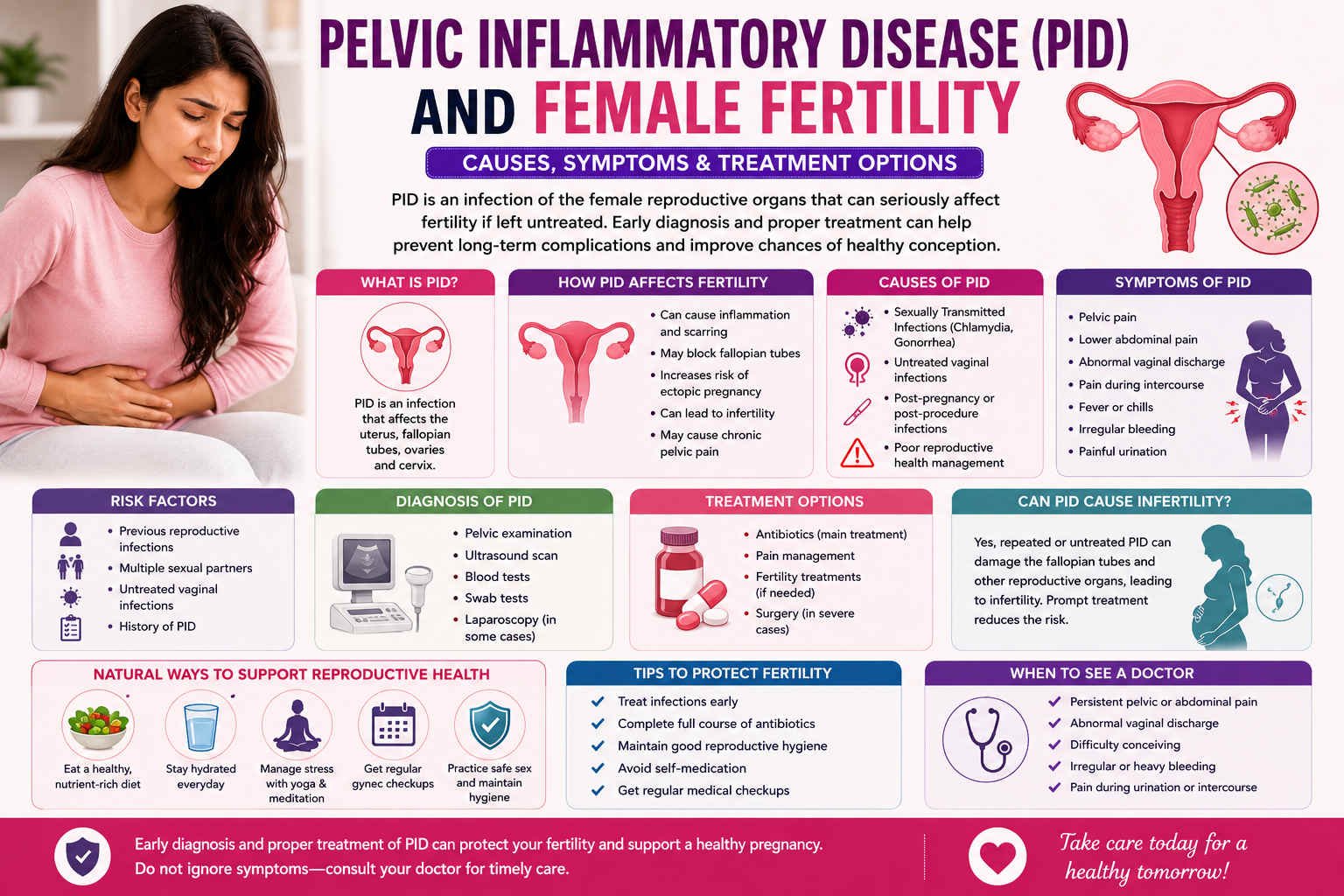
Pelvic Inflammatory Disease and Female Fertility
Pelvic Inflammatory Disease (PID) and Female Fertility: Causes, Symptoms & Treatment Options
Introduction
Pelvic Inflammatory Disease (PID) is a serious infection that affects the female reproductive organs and can significantly impact fertility if left untreated. Many women may not realize they have PID because symptoms can sometimes be mild, vague, or completely absent during the early stages.
Despite the lack of obvious symptoms, PID can silently damage the fallopian tubes, uterus, ovaries, and surrounding tissues. This damage may lead to infertility, chronic pelvic pain, ectopic pregnancy, and pregnancy complications.
Understanding PID, its causes, symptoms, and treatment options is important for women who are planning pregnancy or facing fertility challenges. Early diagnosis and proper treatment can help protect reproductive health and improve fertility outcomes.
What is Pelvic Inflammatory Disease (PID)?
Pelvic Inflammatory Disease (PID) is an infection that affects the upper female reproductive tract.
It commonly involves:
Uterus
Fallopian tubes
Ovaries
Cervix
The infection usually begins in the vagina or cervix and then spreads upward into reproductive organs.
PID can range from mild infection to severe inflammation causing permanent damage.
How PID Affects Female Fertility
PID causes inflammation and scarring within the reproductive system.
This may result in:
Blocked fallopian tubes
Difficulty conceiving
Reduced fertility
Chronic pelvic pain
Increased risk of ectopic pregnancy
Repeated pregnancy complications
The fallopian tubes are especially vulnerable because inflammation may create scar tissue that blocks egg and sperm movement.
Even one episode of untreated PID can affect fertility.
Causes of Pelvic Inflammatory Disease
Several infections and risk factors may lead to PID.
1. Sexually Transmitted Infections (STIs)
The most common causes include bacterial infections such as:
Chlamydia
Gonorrhea
These infections may spread from the lower reproductive tract into upper organs.
2. Untreated Vaginal Infections
Some bacterial infections may travel upward and trigger pelvic inflammation.
Ignoring symptoms may increase complications.
3. Post-Pregnancy or Procedure Infection
In rare situations, infection may occur after:
Childbirth
Miscarriage
Abortion procedures
Gynecological surgeries
This may increase PID risk.
4. Poor Reproductive Health Management
Untreated infections, delayed medical care, and poor reproductive hygiene may contribute.
Symptoms of PID
Many women experience mild symptoms, while others may have severe discomfort.
Common symptoms include:
Pelvic pain
Lower abdominal pain
Abnormal vaginal discharge
Pain during intercourse
Fever and chills
Irregular menstrual bleeding
Painful urination
Fatigue
Heavy periods
Some women may experience no symptoms until fertility problems appear.
Stages and Severity of PID
PID may vary in severity:
Mild PID
Limited infection with minimal symptoms.
Moderate PID
Inflammation spreads and affects reproductive tissues.
Severe PID
May lead to abscess formation, severe pain, and fertility damage.
Early treatment prevents progression.
Risk Factors for PID
Certain factors increase the likelihood of developing PID:
Previous reproductive infections
Multiple sexual partners
History of sexually transmitted infections
Untreated vaginal infections
Previous PID episodes
Lack of routine medical checkups
Young reproductive age
Women with repeated infections have higher fertility risks.
Can PID Cause Infertility?
Yes. PID is one of the major causes of female infertility.
Repeated or untreated infections may damage fallopian tubes permanently.
Possible fertility complications include:
1. Tubal Infertility
Scar tissue may block fallopian tubes and prevent fertilization.
2. Ectopic Pregnancy
A fertilized egg may implant inside the fallopian tube instead of the uterus.
This condition can be dangerous and requires immediate treatment.
3. Implantation Problems
Inflammation may affect the uterine environment and reduce implantation success.
4. Chronic Pelvic Pain
Persistent inflammation may lead to long-term discomfort.
Diagnosis of PID
Early diagnosis is essential for preserving fertility.
Doctors may recommend:
1. Pelvic Examination
Helps detect tenderness, discharge, and abnormalities.
2. Ultrasound Scan
Used to examine reproductive organs and detect complications.
3. Blood Tests
Identify infection and inflammation markers.
4. Swab Tests
Used to detect bacterial infections.
5. Laparoscopy
In complex cases, doctors may use laparoscopy to directly examine reproductive organs.
This provides accurate diagnosis.
Treatment Options for PID
Treatment depends on severity and complications.
1. Antibiotics
Antibiotics are the primary treatment.
They help:
Eliminate infection
Prevent spread
Reduce inflammation
Early antibiotic treatment significantly reduces fertility damage.
2. Pain Management
Doctors may recommend medications to reduce:
Pelvic pain
Fever
Discomfort
3. Fertility Treatments
If infertility develops, fertility treatments may include:
Ovulation support
IUI (Intrauterine Insemination)
IVF (In Vitro Fertilization)
IVF is often recommended when fallopian tubes are severely damaged.
4. Surgery
Surgery may be necessary in severe cases involving:
Abscesses
Scar tissue
Chronic complications
Surgical treatment helps preserve reproductive health.
Long-Term Complications of Untreated PID
Ignoring PID can lead to serious consequences:
Infertility
Ectopic pregnancy
Chronic pelvic pain
Recurrent infections
Scar tissue formation
Pregnancy complications
Prompt treatment prevents most complications.
Natural Ways to Support Reproductive Health
Lifestyle changes may support recovery and reproductive wellness.
1. Healthy Diet
Nutrient-rich foods strengthen immunity.
Include:
Fruits
Vegetables
Whole grains
Protein-rich foods
2. Hydration
Adequate water intake supports overall health and healing.
3. Regular Medical Checkups
Routine examinations help detect infections early.
4. Safe Reproductive Practices
Healthy reproductive habits reduce infection risk.
5. Stress Management
Stress may weaken immunity.
Helpful practices include:
Yoga
Meditation
Deep breathing exercises
Tips to Protect Fertility
Women can reduce fertility risks by:
Treating infections early
Maintaining reproductive hygiene
Completing prescribed medications
Attending regular checkups
Avoiding delayed treatment
Following medical advice carefully
Prevention is the best strategy.
Can You Get Pregnant After PID?
Yes. Many women successfully conceive after PID treatment.
Pregnancy chances depend on:
Severity of infection
Timing of treatment
Fallopian tube condition
Overall reproductive health
Early diagnosis greatly improves outcomes.
When to See a Doctor
Seek medical attention if you experience:
Persistent pelvic pain
Abnormal vaginal discharge
Fever with pelvic discomfort
Difficulty conceiving
Irregular bleeding
Pain during intercourse
Early care protects fertility.
Emotional Impact of PID and Infertility
PID-related fertility problems can affect emotional well-being.
Women may experience:
Anxiety
Stress
Frustration
Depression
Support from family, partners, and healthcare professionals is important.
Mental health is an essential part of fertility care.
FAQs About PID and Fertility
1. Can PID be cured completely?
Yes, early treatment with antibiotics can cure infection.
2. Does PID always cause infertility?
No. Early treatment reduces infertility risk significantly.
3. Can PID return after treatment?
Yes, repeated infections may occur if prevention measures are not followed.
4. Is pregnancy possible after PID?
Yes, many women conceive successfully after proper treatment.
Conclusion
Pelvic Inflammatory Disease is a serious but treatable condition that can significantly affect female fertility if ignored. Since PID may silently damage reproductive organs, early diagnosis and treatment are extremely important.
With timely medical care, healthy lifestyle habits, and proper reproductive health management, many women can preserve fertility and achieve successful pregnancy outcomes.
Understanding symptoms early and taking action can make a major difference in protecting reproductive health.
Introduction
Pelvic Inflammatory Disease (PID) is a serious infection that affects the female reproductive organs and can significantly impact fertility if left untreated. Many women may not realize they have PID because symptoms can sometimes be mild, vague, or completely absent during the early stages.
Despite the lack of obvious symptoms, PID can silently damage the fallopian tubes, uterus, ovaries, and surrounding tissues. This damage may lead to infertility, chronic pelvic pain, ectopic pregnancy, and pregnancy complications.
Understanding PID, its causes, symptoms, and treatment options is important for women who are planning pregnancy or facing fertility challenges. Early diagnosis and proper treatment can help protect reproductive health and improve fertility outcomes.
What is Pelvic Inflammatory Disease (PID)?
Pelvic Inflammatory Disease (PID) is an infection that affects the upper female reproductive tract.
It commonly involves:
Uterus
Fallopian tubes
Ovaries
Cervix
The infection usually begins in the vagina or cervix and then spreads upward into reproductive organs.
PID can range from mild infection to severe inflammation causing permanent damage.
How PID Affects Female Fertility
PID causes inflammation and scarring within the reproductive system.
This may result in:
Blocked fallopian tubes
Difficulty conceiving
Reduced fertility
Chronic pelvic pain
Increased risk of ectopic pregnancy
Repeated pregnancy complications
The fallopian tubes are especially vulnerable because inflammation may create scar tissue that blocks egg and sperm movement.
Even one episode of untreated PID can affect fertility.
Causes of Pelvic Inflammatory Disease
Several infections and risk factors may lead to PID.
1. Sexually Transmitted Infections (STIs)
The most common causes include bacterial infections such as:
Chlamydia
Gonorrhea
These infections may spread from the lower reproductive tract into upper organs.
2. Untreated Vaginal Infections
Some bacterial infections may travel upward and trigger pelvic inflammation.
Ignoring symptoms may increase complications.
3. Post-Pregnancy or Procedure Infection
In rare situations, infection may occur after:
Childbirth
Miscarriage
Abortion procedures
Gynecological surgeries
This may increase PID risk.
4. Poor Reproductive Health Management
Untreated infections, delayed medical care, and poor reproductive hygiene may contribute.
Symptoms of PID
Many women experience mild symptoms, while others may have severe discomfort.
Common symptoms include:
Pelvic pain
Lower abdominal pain
Abnormal vaginal discharge
Pain during intercourse
Fever and chills
Irregular menstrual bleeding
Painful urination
Fatigue
Heavy periods
Some women may experience no symptoms until fertility problems appear.
Stages and Severity of PID
PID may vary in severity:
Mild PID
Limited infection with minimal symptoms.
Moderate PID
Inflammation spreads and affects reproductive tissues.
Severe PID
May lead to abscess formation, severe pain, and fertility damage.
Early treatment prevents progression.
Risk Factors for PID
Certain factors increase the likelihood of developing PID:
Previous reproductive infections
Multiple sexual partners
History of sexually transmitted infections
Untreated vaginal infections
Previous PID episodes
Lack of routine medical checkups
Young reproductive age
Women with repeated infections have higher fertility risks.
Can PID Cause Infertility?
Yes. PID is one of the major causes of female infertility.
Repeated or untreated infections may damage fallopian tubes permanently.
Possible fertility complications include:
1. Tubal Infertility
Scar tissue may block fallopian tubes and prevent fertilization.
2. Ectopic Pregnancy
A fertilized egg may implant inside the fallopian tube instead of the uterus.
This condition can be dangerous and requires immediate treatment.
3. Implantation Problems
Inflammation may affect the uterine environment and reduce implantation success.
4. Chronic Pelvic Pain
Persistent inflammation may lead to long-term discomfort.
Diagnosis of PID
Early diagnosis is essential for preserving fertility.
Doctors may recommend:
1. Pelvic Examination
Helps detect tenderness, discharge, and abnormalities.
2. Ultrasound Scan
Used to examine reproductive organs and detect complications.
3. Blood Tests
Identify infection and inflammation markers.
4. Swab Tests
Used to detect bacterial infections.
5. Laparoscopy
In complex cases, doctors may use laparoscopy to directly examine reproductive organs.
This provides accurate diagnosis.
Treatment Options for PID
Treatment depends on severity and complications.
1. Antibiotics
Antibiotics are the primary treatment.
They help:
Eliminate infection
Prevent spread
Reduce inflammation
Early antibiotic treatment significantly reduces fertility damage.
2. Pain Management
Doctors may recommend medications to reduce:
Pelvic pain
Fever
Discomfort
3. Fertility Treatments
If infertility develops, fertility treatments may include:
Ovulation support
IUI (Intrauterine Insemination)
IVF (In Vitro Fertilization)
IVF is often recommended when fallopian tubes are severely damaged.
4. Surgery
Surgery may be necessary in severe cases involving:
Abscesses
Scar tissue
Chronic complications
Surgical treatment helps preserve reproductive health.
Long-Term Complications of Untreated PID
Ignoring PID can lead to serious consequences:
Infertility
Ectopic pregnancy
Chronic pelvic pain
Recurrent infections
Scar tissue formation
Pregnancy complications
Prompt treatment prevents most complications.
Natural Ways to Support Reproductive Health
Lifestyle changes may support recovery and reproductive wellness.
1. Healthy Diet
Nutrient-rich foods strengthen immunity.
Include:
Fruits
Vegetables
Whole grains
Protein-rich foods
2. Hydration
Adequate water intake supports overall health and healing.
3. Regular Medical Checkups
Routine examinations help detect infections early.
4. Safe Reproductive Practices
Healthy reproductive habits reduce infection risk.
5. Stress Management
Stress may weaken immunity.
Helpful practices include:
Yoga
Meditation
Deep breathing exercises
Tips to Protect Fertility
Women can reduce fertility risks by:
Treating infections early
Maintaining reproductive hygiene
Completing prescribed medications
Attending regular checkups
Avoiding delayed treatment
Following medical advice carefully
Prevention is the best strategy.
Can You Get Pregnant After PID?
Yes. Many women successfully conceive after PID treatment.
Pregnancy chances depend on:
Severity of infection
Timing of treatment
Fallopian tube condition
Overall reproductive health
Early diagnosis greatly improves outcomes.
When to See a Doctor
Seek medical attention if you experience:
Persistent pelvic pain
Abnormal vaginal discharge
Fever with pelvic discomfort
Difficulty conceiving
Irregular bleeding
Pain during intercourse
Early care protects fertility.
Emotional Impact of PID and Infertility
PID-related fertility problems can affect emotional well-being.
Women may experience:
Anxiety
Stress
Frustration
Depression
Support from family, partners, and healthcare professionals is important.
Mental health is an essential part of fertility care.
FAQs About PID and Fertility
1. Can PID be cured completely?
Yes, early treatment with antibiotics can cure infection.
2. Does PID always cause infertility?
No. Early treatment reduces infertility risk significantly.
3. Can PID return after treatment?
Yes, repeated infections may occur if prevention measures are not followed.
4. Is pregnancy possible after PID?
Yes, many women conceive successfully after proper treatment.
Conclusion
Pelvic Inflammatory Disease is a serious but treatable condition that can significantly affect female fertility if ignored. Since PID may silently damage reproductive organs, early diagnosis and treatment are extremely important.
With timely medical care, healthy lifestyle habits, and proper reproductive health management, many women can preserve fertility and achieve successful pregnancy outcomes.
Understanding symptoms early and taking action can make a major difference in protecting reproductive health.