
Ovarian Reserve and Female Fertility
Shop through our latest selection of Fashion
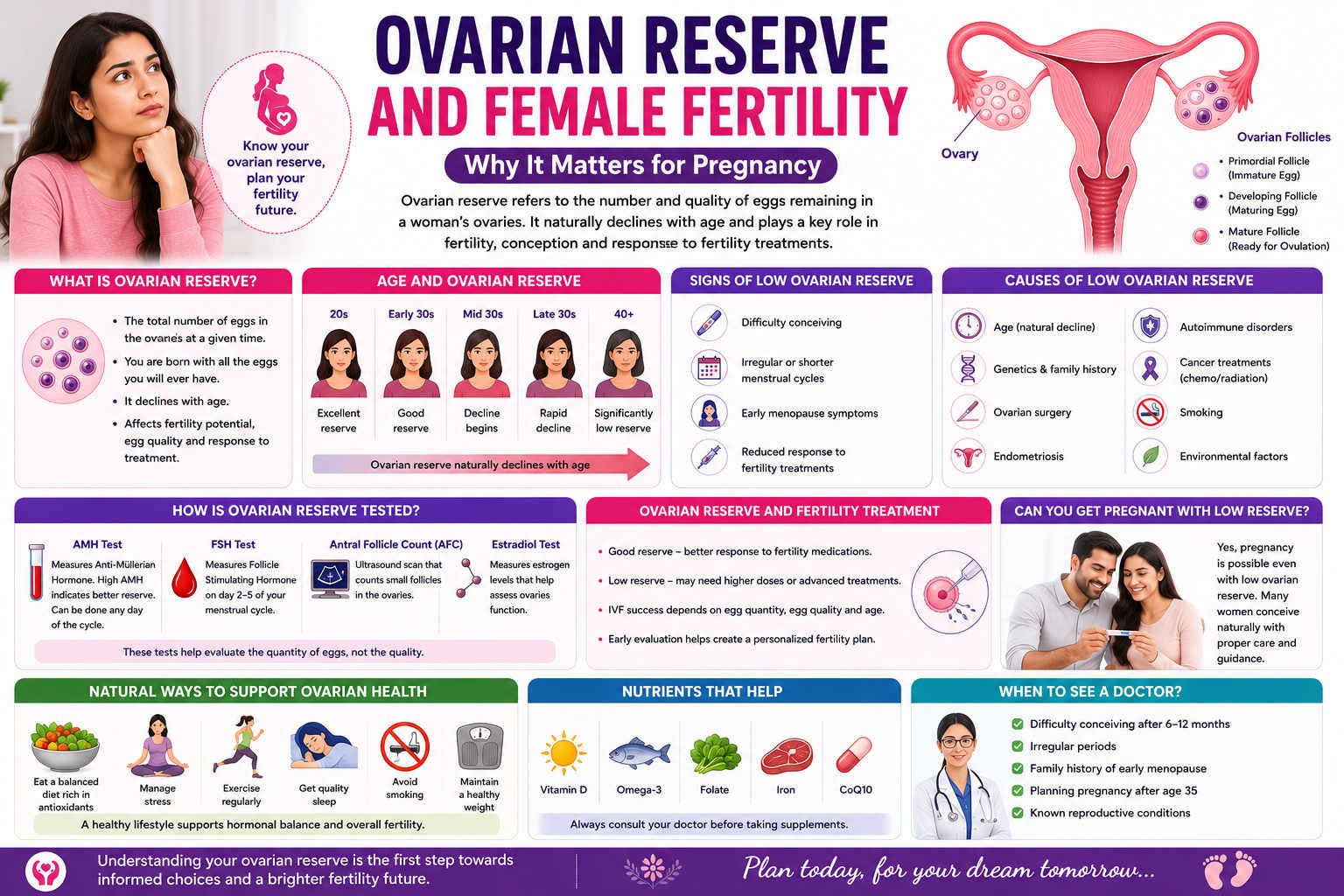
Ovarian Reserve and Female Fertility
Ovarian Reserve and Female Fertility: Why It Matters for Pregnancy
Introduction
Female fertility depends on many factors, including age, hormone balance, reproductive health, and egg quality. One of the most important yet often misunderstood aspects of fertility is ovarian reserve. Ovarian reserve refers to the number and quality of eggs remaining in a woman's ovaries. Since women are born with a fixed number of eggs, ovarian reserve naturally declines with age.
For women who are planning pregnancy or experiencing difficulty conceiving, understanding ovarian reserve can provide valuable insight into reproductive potential. While ovarian reserve does not guarantee pregnancy, it plays a significant role in determining fertility outcomes and response to fertility treatments.
In recent years, awareness about ovarian reserve has increased because more women are choosing to start families later in life. Understanding how ovarian reserve affects fertility can help women make informed decisions about family planning and reproductive health.
What Is Ovarian Reserve?
Ovarian reserve refers to the total number of eggs available in a woman's ovaries at a given time.
Unlike men, who continuously produce sperm throughout life, women are born with all the eggs they will ever have.
The number of eggs changes over time:
At birth: Approximately 1–2 million eggs
At puberty: Around 300,000–500,000 eggs
By age 30: Significant decline begins
By age 40: Egg quantity and quality decrease rapidly
Only a small percentage of these eggs mature and are released during ovulation.
The remaining eggs gradually decline through a natural process called ovarian aging.
Why Is Ovarian Reserve Important?
Ovarian reserve is important because it influences:
Fertility potential
Egg quality
Chances of conception
Response to fertility treatments
Pregnancy success rates
Women with a healthy ovarian reserve generally have a better chance of conceiving naturally compared to women with significantly reduced ovarian reserve.
However, ovarian reserve is only one part of fertility and should be considered alongside other factors.
Ovarian Reserve vs Egg Quality
Many women confuse ovarian reserve with egg quality.
Although related, they are different.
Ovarian Reserve
Refers to:
Number of eggs available
Quantity of remaining follicles
Egg Quality
Refers to:
Genetic health of eggs
Ability to fertilize successfully
Ability to develop into a healthy embryo
A woman may have a reasonable ovarian reserve but poor egg quality due to age-related changes.
Both factors are important for successful conception.
How Age Affects Ovarian Reserve
Age is the most significant factor influencing ovarian reserve.
In Your 20s
Highest fertility potential
Better egg quality
Higher pregnancy rates
Early 30s
Fertility remains relatively strong
Gradual decline begins
Mid to Late 30s
Faster decline in egg quantity
Reduced egg quality
After 40
Significant reduction in ovarian reserve
Increased difficulty conceiving
Higher miscarriage risk
Because ovarian reserve naturally decreases with age, many fertility specialists encourage early fertility assessment when pregnancy plans are delayed.
Causes of Low Ovarian Reserve
Although age is the most common cause, several other factors can contribute to diminished ovarian reserve.
Genetics
Family history may influence ovarian aging.
Women whose mothers experienced early menopause may have similar risks.
Autoimmune Disorders
Some autoimmune diseases may affect ovarian function.
Ovarian Surgery
Surgical procedures involving the ovaries can reduce egg reserve.
Endometriosis
Severe endometriosis may affect ovarian tissue and fertility.
Cancer Treatments
Chemotherapy and radiation therapy may damage ovarian follicles.
Smoking
Smoking accelerates egg loss and ovarian aging.
Environmental Factors
Exposure to toxins and pollutants may negatively affect reproductive health.
Symptoms of Low Ovarian Reserve
Low ovarian reserve often develops without obvious symptoms.
However, some women may experience:
Difficulty conceiving
Irregular menstrual cycles
Shorter menstrual cycles
Reduced fertility with age
Early menopause symptoms
Many women discover diminished ovarian reserve only after fertility testing.
How Is Ovarian Reserve Tested?
Several tests help evaluate ovarian reserve.
Anti-Müllerian Hormone (AMH) Test
AMH is one of the most commonly used fertility tests.
It measures hormone levels produced by ovarian follicles.
Higher AMH levels generally indicate:
Better ovarian reserve
Lower AMH levels may suggest:
Reduced ovarian reserve
AMH testing can be performed at any point during the menstrual cycle.
Follicle Stimulating Hormone (FSH) Test
FSH is measured early in the menstrual cycle.
High FSH levels may indicate declining ovarian function.
Antral Follicle Count (AFC)
This ultrasound test counts small follicles within the ovaries.
A higher follicle count usually reflects better ovarian reserve.
Estradiol Testing
Estradiol levels may provide additional information about ovarian function.
Can Women with Low Ovarian Reserve Get Pregnant?
Yes.
Low ovarian reserve does not necessarily mean infertility.
Many women with diminished ovarian reserve conceive naturally.
Pregnancy depends on several factors:
Egg quality
Ovulation
Uterine health
Hormonal balance
Partner fertility
Early diagnosis and fertility support can improve outcomes.
Ovarian Reserve and Fertility Treatments
Ovarian reserve influences how women respond to fertility treatments.
Ovulation Induction
Women with adequate ovarian reserve may respond better to fertility medications.
Intrauterine Insemination (IUI)
Success rates may be influenced by ovarian reserve and age.
In Vitro Fertilization (IVF)
IVF outcomes often depend on:
Egg quantity
Egg quality
Ovarian response
Women with lower ovarian reserve may require individualized treatment approaches.
Natural Ways to Support Ovarian Health
Although ovarian reserve cannot be completely restored, healthy lifestyle habits may support reproductive wellness.
Eat a Fertility-Friendly Diet
Include foods rich in:
Antioxidants
Healthy fats
Protein
Vitamins
Minerals
Good choices include:
Fruits
Vegetables
Nuts
Seeds
Whole grains
Fish
Maintain Healthy Weight
Both underweight and overweight conditions may affect fertility.
Maintaining a healthy BMI supports hormonal balance.
Exercise Regularly
Moderate exercise improves circulation and overall health.
Avoid excessive exercise, which may disrupt ovulation.
Manage Stress
Chronic stress may affect reproductive hormones.
Helpful activities include:
Yoga
Meditation
Deep breathing
Walking
Prioritize Sleep
Adequate sleep supports hormone production and reproductive health.
Aim for:
7–9 hours nightly
Avoid Smoking
Smoking is strongly associated with accelerated ovarian aging.
Women planning pregnancy should avoid tobacco exposure.
Nutrients That Support Ovarian Health
Several nutrients may help support fertility.
Vitamin D
Supports reproductive function and hormone balance.
Omega-3 Fatty Acids
Help reduce inflammation and support hormone production.
Folate
Important before and during pregnancy.
Iron
Supports healthy ovulation.
Coenzyme Q10 (CoQ10)
May support egg quality, especially in older women.
Always consult a healthcare professional before starting supplements.
Signs You Should Consider Fertility Testing
Women may benefit from ovarian reserve testing if they:
Are over age 35
Have irregular periods
Have a family history of early menopause
Have undergone ovarian surgery
Have endometriosis
Have been trying to conceive for over one year
Early testing provides valuable information about reproductive health.
When to Consult a Fertility Specialist
Seek medical guidance if:
Pregnancy has not occurred after 12 months of trying
You are over 35 and have tried for 6 months
Menstrual cycles are irregular
You have known reproductive conditions
Early intervention often improves fertility outcomes.
Can Ovarian Reserve Be Increased?
Currently, no treatment can significantly increase the number of eggs remaining in the ovaries.
However, women can:
Improve overall reproductive health
Support egg quality
Optimize hormone balance
Explore fertility preservation options
Maintaining a healthy lifestyle can positively influence fertility outcomes.
Pregnancy Planning and Ovarian Reserve
Understanding ovarian reserve helps women make informed reproductive decisions.
Women who know their fertility status can:
Plan pregnancy more effectively
Seek treatment when necessary
Consider fertility preservation
Reduce delays in conception planning
Knowledge empowers women to take proactive steps toward reproductive health.
Conclusion
Ovarian reserve is a key factor in female fertility and reflects the number of eggs remaining in the ovaries. While ovarian reserve naturally declines with age, understanding fertility status can help women make informed choices about family planning and reproductive health.
Although low ovarian reserve may reduce pregnancy chances, it does not eliminate the possibility of conception. With proper medical guidance, healthy lifestyle habits, and timely fertility evaluation, many women successfully achieve pregnancy.
Taking care of reproductive health today can help improve fertility outcomes and support the journey toward motherhood.
Introduction
Female fertility depends on many factors, including age, hormone balance, reproductive health, and egg quality. One of the most important yet often misunderstood aspects of fertility is ovarian reserve. Ovarian reserve refers to the number and quality of eggs remaining in a woman's ovaries. Since women are born with a fixed number of eggs, ovarian reserve naturally declines with age.
For women who are planning pregnancy or experiencing difficulty conceiving, understanding ovarian reserve can provide valuable insight into reproductive potential. While ovarian reserve does not guarantee pregnancy, it plays a significant role in determining fertility outcomes and response to fertility treatments.
In recent years, awareness about ovarian reserve has increased because more women are choosing to start families later in life. Understanding how ovarian reserve affects fertility can help women make informed decisions about family planning and reproductive health.
What Is Ovarian Reserve?
Ovarian reserve refers to the total number of eggs available in a woman's ovaries at a given time.
Unlike men, who continuously produce sperm throughout life, women are born with all the eggs they will ever have.
The number of eggs changes over time:
At birth: Approximately 1–2 million eggs
At puberty: Around 300,000–500,000 eggs
By age 30: Significant decline begins
By age 40: Egg quantity and quality decrease rapidly
Only a small percentage of these eggs mature and are released during ovulation.
The remaining eggs gradually decline through a natural process called ovarian aging.
Why Is Ovarian Reserve Important?
Ovarian reserve is important because it influences:
Fertility potential
Egg quality
Chances of conception
Response to fertility treatments
Pregnancy success rates
Women with a healthy ovarian reserve generally have a better chance of conceiving naturally compared to women with significantly reduced ovarian reserve.
However, ovarian reserve is only one part of fertility and should be considered alongside other factors.
Ovarian Reserve vs Egg Quality
Many women confuse ovarian reserve with egg quality.
Although related, they are different.
Ovarian Reserve
Refers to:
Number of eggs available
Quantity of remaining follicles
Egg Quality
Refers to:
Genetic health of eggs
Ability to fertilize successfully
Ability to develop into a healthy embryo
A woman may have a reasonable ovarian reserve but poor egg quality due to age-related changes.
Both factors are important for successful conception.
How Age Affects Ovarian Reserve
Age is the most significant factor influencing ovarian reserve.
In Your 20s
Highest fertility potential
Better egg quality
Higher pregnancy rates
Early 30s
Fertility remains relatively strong
Gradual decline begins
Mid to Late 30s
Faster decline in egg quantity
Reduced egg quality
After 40
Significant reduction in ovarian reserve
Increased difficulty conceiving
Higher miscarriage risk
Because ovarian reserve naturally decreases with age, many fertility specialists encourage early fertility assessment when pregnancy plans are delayed.
Causes of Low Ovarian Reserve
Although age is the most common cause, several other factors can contribute to diminished ovarian reserve.
Genetics
Family history may influence ovarian aging.
Women whose mothers experienced early menopause may have similar risks.
Autoimmune Disorders
Some autoimmune diseases may affect ovarian function.
Ovarian Surgery
Surgical procedures involving the ovaries can reduce egg reserve.
Endometriosis
Severe endometriosis may affect ovarian tissue and fertility.
Cancer Treatments
Chemotherapy and radiation therapy may damage ovarian follicles.
Smoking
Smoking accelerates egg loss and ovarian aging.
Environmental Factors
Exposure to toxins and pollutants may negatively affect reproductive health.
Symptoms of Low Ovarian Reserve
Low ovarian reserve often develops without obvious symptoms.
However, some women may experience:
Difficulty conceiving
Irregular menstrual cycles
Shorter menstrual cycles
Reduced fertility with age
Early menopause symptoms
Many women discover diminished ovarian reserve only after fertility testing.
How Is Ovarian Reserve Tested?
Several tests help evaluate ovarian reserve.
Anti-Müllerian Hormone (AMH) Test
AMH is one of the most commonly used fertility tests.
It measures hormone levels produced by ovarian follicles.
Higher AMH levels generally indicate:
Better ovarian reserve
Lower AMH levels may suggest:
Reduced ovarian reserve
AMH testing can be performed at any point during the menstrual cycle.
Follicle Stimulating Hormone (FSH) Test
FSH is measured early in the menstrual cycle.
High FSH levels may indicate declining ovarian function.
Antral Follicle Count (AFC)
This ultrasound test counts small follicles within the ovaries.
A higher follicle count usually reflects better ovarian reserve.
Estradiol Testing
Estradiol levels may provide additional information about ovarian function.
Can Women with Low Ovarian Reserve Get Pregnant?
Yes.
Low ovarian reserve does not necessarily mean infertility.
Many women with diminished ovarian reserve conceive naturally.
Pregnancy depends on several factors:
Egg quality
Ovulation
Uterine health
Hormonal balance
Partner fertility
Early diagnosis and fertility support can improve outcomes.
Ovarian Reserve and Fertility Treatments
Ovarian reserve influences how women respond to fertility treatments.
Ovulation Induction
Women with adequate ovarian reserve may respond better to fertility medications.
Intrauterine Insemination (IUI)
Success rates may be influenced by ovarian reserve and age.
In Vitro Fertilization (IVF)
IVF outcomes often depend on:
Egg quantity
Egg quality
Ovarian response
Women with lower ovarian reserve may require individualized treatment approaches.
Natural Ways to Support Ovarian Health
Although ovarian reserve cannot be completely restored, healthy lifestyle habits may support reproductive wellness.
Eat a Fertility-Friendly Diet
Include foods rich in:
Antioxidants
Healthy fats
Protein
Vitamins
Minerals
Good choices include:
Fruits
Vegetables
Nuts
Seeds
Whole grains
Fish
Maintain Healthy Weight
Both underweight and overweight conditions may affect fertility.
Maintaining a healthy BMI supports hormonal balance.
Exercise Regularly
Moderate exercise improves circulation and overall health.
Avoid excessive exercise, which may disrupt ovulation.
Manage Stress
Chronic stress may affect reproductive hormones.
Helpful activities include:
Yoga
Meditation
Deep breathing
Walking
Prioritize Sleep
Adequate sleep supports hormone production and reproductive health.
Aim for:
7–9 hours nightly
Avoid Smoking
Smoking is strongly associated with accelerated ovarian aging.
Women planning pregnancy should avoid tobacco exposure.
Nutrients That Support Ovarian Health
Several nutrients may help support fertility.
Vitamin D
Supports reproductive function and hormone balance.
Omega-3 Fatty Acids
Help reduce inflammation and support hormone production.
Folate
Important before and during pregnancy.
Iron
Supports healthy ovulation.
Coenzyme Q10 (CoQ10)
May support egg quality, especially in older women.
Always consult a healthcare professional before starting supplements.
Signs You Should Consider Fertility Testing
Women may benefit from ovarian reserve testing if they:
Are over age 35
Have irregular periods
Have a family history of early menopause
Have undergone ovarian surgery
Have endometriosis
Have been trying to conceive for over one year
Early testing provides valuable information about reproductive health.
When to Consult a Fertility Specialist
Seek medical guidance if:
Pregnancy has not occurred after 12 months of trying
You are over 35 and have tried for 6 months
Menstrual cycles are irregular
You have known reproductive conditions
Early intervention often improves fertility outcomes.
Can Ovarian Reserve Be Increased?
Currently, no treatment can significantly increase the number of eggs remaining in the ovaries.
However, women can:
Improve overall reproductive health
Support egg quality
Optimize hormone balance
Explore fertility preservation options
Maintaining a healthy lifestyle can positively influence fertility outcomes.
Pregnancy Planning and Ovarian Reserve
Understanding ovarian reserve helps women make informed reproductive decisions.
Women who know their fertility status can:
Plan pregnancy more effectively
Seek treatment when necessary
Consider fertility preservation
Reduce delays in conception planning
Knowledge empowers women to take proactive steps toward reproductive health.
Conclusion
Ovarian reserve is a key factor in female fertility and reflects the number of eggs remaining in the ovaries. While ovarian reserve naturally declines with age, understanding fertility status can help women make informed choices about family planning and reproductive health.
Although low ovarian reserve may reduce pregnancy chances, it does not eliminate the possibility of conception. With proper medical guidance, healthy lifestyle habits, and timely fertility evaluation, many women successfully achieve pregnancy.
Taking care of reproductive health today can help improve fertility outcomes and support the journey toward motherhood.