
Luteal Phase Defect and Female Fertility
Shop through our latest selection of Fashion
Luteal Phase Defect and Female Fertility
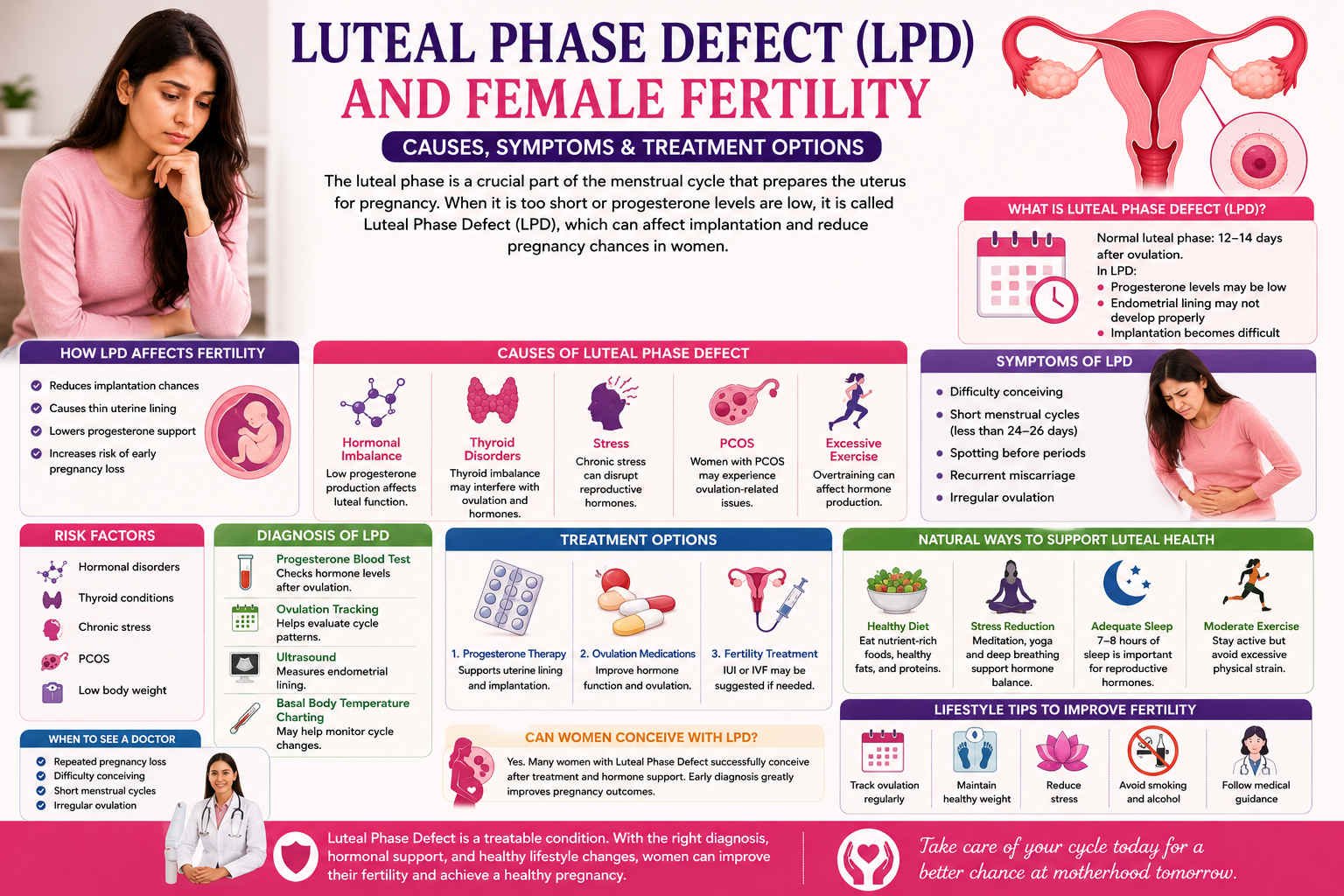
Luteal Phase Defect and Female Fertility: Causes, Symptoms & Treatment Options
Introduction
The menstrual cycle is made up of different phases, and each phase plays an important role in female fertility and successful pregnancy. One of the most crucial phases is the luteal phase, which occurs after ovulation and before menstruation begins. During this time, the body produces progesterone to prepare the uterus for implantation and pregnancy.
When the luteal phase becomes too short or progesterone levels remain low, the condition is known as Luteal Phase Defect (LPD). This issue can interfere with implantation, affect uterine lining development, and reduce pregnancy chances.
Many women experiencing infertility, repeated implantation failure, or early miscarriage may not realize that luteal phase problems could be contributing to their fertility struggles. Understanding LPD and seeking early treatment can significantly improve reproductive outcomes.
What is Luteal Phase Defect (LPD)?
The luteal phase begins after ovulation and usually lasts 12–14 days.
During this phase:
The ovary releases progesterone
The uterine lining thickens
The body prepares for embryo implantation
In women with Luteal Phase Defect:
Progesterone production may be insufficient
Endometrial lining may not develop properly
Implantation becomes difficult
As a result, pregnancy may not occur or may end very early.
Understanding the Luteal Phase in the Menstrual Cycle
The menstrual cycle has four phases:
1. Menstrual Phase
The uterine lining sheds, causing menstruation.
2. Follicular Phase
Eggs mature inside ovarian follicles.
3. Ovulation
The mature egg is released.
4. Luteal Phase
Progesterone prepares the uterus for pregnancy.
The luteal phase is essential because implantation depends heavily on healthy progesterone support.
How Luteal Phase Defect Affects Fertility
LPD affects fertility in several ways.
1. Reduced Implantation Chances
Progesterone helps create a healthy environment for embryo implantation.
Low progesterone may reduce implantation success.
2. Thin Endometrial Lining
The uterine lining may not become thick enough.
A thin lining makes embryo attachment difficult.
3. Poor Pregnancy Support
Progesterone supports early pregnancy.
Low levels may reduce pregnancy maintenance.
4. Increased Miscarriage Risk
Insufficient hormone support may increase early pregnancy loss risk.
Women with recurrent miscarriage sometimes undergo evaluation for luteal phase issues.
Causes of Luteal Phase Defect
Several factors may contribute to LPD.
1. Hormonal Imbalance
Low progesterone production is one of the main causes.
Hormonal imbalance may affect:
Ovulation
Implantation
Cycle regularity
2. Thyroid Disorders
Thyroid hormones influence reproductive hormones.
Conditions such as hypothyroidism may interfere with luteal function.
3. Stress
Chronic stress raises cortisol levels.
High cortisol may disrupt progesterone production and ovulation.
4. Polycystic Ovary Syndrome (PCOS)
Women with PCOS often experience irregular ovulation and hormonal disturbances.
This may contribute to luteal abnormalities.
5. Excessive Exercise
Intense physical training or over-exercising can affect hormone production.
This may shorten the luteal phase.
6. Low Body Weight
Insufficient body fat may disrupt reproductive hormones.
This affects progesterone production.
7. Age-Related Changes
As women age, hormonal balance changes naturally.
Progesterone levels may decline over time.
Symptoms of Luteal Phase Defect
Symptoms vary among women.
Common signs include:
Difficulty conceiving
Short menstrual cycles
Spotting before periods
Recurrent miscarriage
Irregular ovulation
Premenstrual spotting
Early pregnancy loss
Reduced fertility
Some women may have no noticeable symptoms.
Risk Factors for LPD
Certain conditions increase the risk.
Common risk factors include:
Hormonal disorders
Thyroid disease
Chronic stress
PCOS
Low body weight
Over-exercising
Previous fertility issues
Advanced reproductive age
Women with these risk factors may benefit from fertility evaluation.
How Luteal Phase Defect is Diagnosed
Doctors use different methods to diagnose LPD.
1. Progesterone Blood Test
This test checks progesterone levels after ovulation.
Low progesterone may indicate luteal issues.
2. Ovulation Tracking
Monitoring ovulation helps evaluate cycle timing and luteal length.
Methods include:
Ovulation kits
Cycle tracking apps
Fertility monitoring
3. Ultrasound Scan
Ultrasound helps assess:
Endometrial thickness
Ovulation status
Follicle development
4. Basal Body Temperature (BBT) Charting
Daily temperature tracking may identify cycle patterns.
Changes after ovulation provide clues about progesterone activity.
5. Hormonal Evaluation
Doctors may assess:
Thyroid hormones
FSH
LH
Estrogen
Progesterone levels
Treatment Options for Luteal Phase Defect
Treatment depends on underlying causes.
1. Progesterone Therapy
Progesterone supplements are one of the most common treatments.
They help:
Support uterine lining
Improve implantation
Maintain pregnancy
Progesterone support is often used in fertility treatments.
2. Ovulation Medications
Doctors may prescribe medications to improve ovulation and hormone balance.
These help regulate reproductive hormones.
3. Fertility Treatments
If pregnancy remains difficult:
IUI (Intrauterine Insemination)
IVF (In Vitro Fertilization)
may be recommended.
Hormonal support often accompanies these treatments.
4. Treatment of Underlying Conditions
Managing conditions like:
Thyroid disorders
PCOS
Stress-related issues
can improve luteal health.
Natural Ways to Support Luteal Health
Lifestyle changes can support reproductive hormones.
1. Healthy Diet
Include nutrient-rich foods:
Fruits
Vegetables
Whole grains
Healthy fats
Protein-rich foods
Nutrition supports hormone production.
2. Stress Reduction
Stress affects progesterone levels.
Helpful methods include:
Yoga
Meditation
Deep breathing exercises
Mental wellness supports fertility.
3. Adequate Sleep
Sleep regulates hormone production.
Aim for:
7–8 hours daily
Good sleep supports reproductive health.
4. Moderate Exercise
Regular exercise improves circulation and hormone balance.
Avoid excessive physical strain.
5. Maintain Healthy Weight
Healthy body weight supports ovulation and hormone regulation.
Lifestyle Tips to Improve Fertility
Women trying to conceive should:
Track ovulation regularly
Maintain healthy weight
Reduce stress
Avoid smoking and alcohol
Eat balanced meals
Stay hydrated
Follow medical guidance
Consistency improves fertility outcomes.
Can Women Conceive with Luteal Phase Defect?
Yes. Many women with LPD successfully conceive after treatment.
Pregnancy success improves with:
Hormonal support
Early diagnosis
Lifestyle improvements
Fertility treatments when needed
Timely intervention makes a major difference.
When to See a Doctor
Consult a doctor if you experience:
Repeated pregnancy loss
Difficulty conceiving
Short menstrual cycles
Spotting before periods
Irregular ovulation
Failed fertility treatments
Early evaluation improves outcomes.
Emotional Impact of Fertility Challenges
Women dealing with fertility problems often experience:
Stress
Anxiety
Frustration
Emotional exhaustion
Emotional support and counseling can help during treatment.
Mental health is an important part of fertility care.
FAQs About Luteal Phase Defect
1. Can LPD cause infertility?
Yes, it may affect implantation and pregnancy support.
2. Is pregnancy possible with LPD?
Yes, many women conceive successfully after treatment.
3. Can progesterone improve fertility?
Progesterone support may help improve implantation and pregnancy maintenance.
4. Does stress affect luteal phase health?
Yes, chronic stress can influence reproductive hormones.
Conclusion
Luteal Phase Defect is a lesser-known but important fertility issue that can affect implantation and pregnancy success. Since progesterone plays a major role in supporting pregnancy, hormonal balance during the luteal phase is essential.
With early diagnosis, hormone support, lifestyle improvements, and fertility treatment when needed, many women with LPD successfully achieve pregnancy.
Understanding menstrual cycle health is an important step toward improving fertility and achieving a healthy conception journey.
Introduction
The menstrual cycle is made up of different phases, and each phase plays an important role in female fertility and successful pregnancy. One of the most crucial phases is the luteal phase, which occurs after ovulation and before menstruation begins. During this time, the body produces progesterone to prepare the uterus for implantation and pregnancy.
When the luteal phase becomes too short or progesterone levels remain low, the condition is known as Luteal Phase Defect (LPD). This issue can interfere with implantation, affect uterine lining development, and reduce pregnancy chances.
Many women experiencing infertility, repeated implantation failure, or early miscarriage may not realize that luteal phase problems could be contributing to their fertility struggles. Understanding LPD and seeking early treatment can significantly improve reproductive outcomes.
What is Luteal Phase Defect (LPD)?
The luteal phase begins after ovulation and usually lasts 12–14 days.
During this phase:
The ovary releases progesterone
The uterine lining thickens
The body prepares for embryo implantation
In women with Luteal Phase Defect:
Progesterone production may be insufficient
Endometrial lining may not develop properly
Implantation becomes difficult
As a result, pregnancy may not occur or may end very early.
Understanding the Luteal Phase in the Menstrual Cycle
The menstrual cycle has four phases:
1. Menstrual Phase
The uterine lining sheds, causing menstruation.
2. Follicular Phase
Eggs mature inside ovarian follicles.
3. Ovulation
The mature egg is released.
4. Luteal Phase
Progesterone prepares the uterus for pregnancy.
The luteal phase is essential because implantation depends heavily on healthy progesterone support.
How Luteal Phase Defect Affects Fertility
LPD affects fertility in several ways.
1. Reduced Implantation Chances
Progesterone helps create a healthy environment for embryo implantation.
Low progesterone may reduce implantation success.
2. Thin Endometrial Lining
The uterine lining may not become thick enough.
A thin lining makes embryo attachment difficult.
3. Poor Pregnancy Support
Progesterone supports early pregnancy.
Low levels may reduce pregnancy maintenance.
4. Increased Miscarriage Risk
Insufficient hormone support may increase early pregnancy loss risk.
Women with recurrent miscarriage sometimes undergo evaluation for luteal phase issues.
Causes of Luteal Phase Defect
Several factors may contribute to LPD.
1. Hormonal Imbalance
Low progesterone production is one of the main causes.
Hormonal imbalance may affect:
Ovulation
Implantation
Cycle regularity
2. Thyroid Disorders
Thyroid hormones influence reproductive hormones.
Conditions such as hypothyroidism may interfere with luteal function.
3. Stress
Chronic stress raises cortisol levels.
High cortisol may disrupt progesterone production and ovulation.
4. Polycystic Ovary Syndrome (PCOS)
Women with PCOS often experience irregular ovulation and hormonal disturbances.
This may contribute to luteal abnormalities.
5. Excessive Exercise
Intense physical training or over-exercising can affect hormone production.
This may shorten the luteal phase.
6. Low Body Weight
Insufficient body fat may disrupt reproductive hormones.
This affects progesterone production.
7. Age-Related Changes
As women age, hormonal balance changes naturally.
Progesterone levels may decline over time.
Symptoms of Luteal Phase Defect
Symptoms vary among women.
Common signs include:
Difficulty conceiving
Short menstrual cycles
Spotting before periods
Recurrent miscarriage
Irregular ovulation
Premenstrual spotting
Early pregnancy loss
Reduced fertility
Some women may have no noticeable symptoms.
Risk Factors for LPD
Certain conditions increase the risk.
Common risk factors include:
Hormonal disorders
Thyroid disease
Chronic stress
PCOS
Low body weight
Over-exercising
Previous fertility issues
Advanced reproductive age
Women with these risk factors may benefit from fertility evaluation.
How Luteal Phase Defect is Diagnosed
Doctors use different methods to diagnose LPD.
1. Progesterone Blood Test
This test checks progesterone levels after ovulation.
Low progesterone may indicate luteal issues.
2. Ovulation Tracking
Monitoring ovulation helps evaluate cycle timing and luteal length.
Methods include:
Ovulation kits
Cycle tracking apps
Fertility monitoring
3. Ultrasound Scan
Ultrasound helps assess:
Endometrial thickness
Ovulation status
Follicle development
4. Basal Body Temperature (BBT) Charting
Daily temperature tracking may identify cycle patterns.
Changes after ovulation provide clues about progesterone activity.
5. Hormonal Evaluation
Doctors may assess:
Thyroid hormones
FSH
LH
Estrogen
Progesterone levels
Treatment Options for Luteal Phase Defect
Treatment depends on underlying causes.
1. Progesterone Therapy
Progesterone supplements are one of the most common treatments.
They help:
Support uterine lining
Improve implantation
Maintain pregnancy
Progesterone support is often used in fertility treatments.
2. Ovulation Medications
Doctors may prescribe medications to improve ovulation and hormone balance.
These help regulate reproductive hormones.
3. Fertility Treatments
If pregnancy remains difficult:
IUI (Intrauterine Insemination)
IVF (In Vitro Fertilization)
may be recommended.
Hormonal support often accompanies these treatments.
4. Treatment of Underlying Conditions
Managing conditions like:
Thyroid disorders
PCOS
Stress-related issues
can improve luteal health.
Natural Ways to Support Luteal Health
Lifestyle changes can support reproductive hormones.
1. Healthy Diet
Include nutrient-rich foods:
Fruits
Vegetables
Whole grains
Healthy fats
Protein-rich foods
Nutrition supports hormone production.
2. Stress Reduction
Stress affects progesterone levels.
Helpful methods include:
Yoga
Meditation
Deep breathing exercises
Mental wellness supports fertility.
3. Adequate Sleep
Sleep regulates hormone production.
Aim for:
7–8 hours daily
Good sleep supports reproductive health.
4. Moderate Exercise
Regular exercise improves circulation and hormone balance.
Avoid excessive physical strain.
5. Maintain Healthy Weight
Healthy body weight supports ovulation and hormone regulation.
Lifestyle Tips to Improve Fertility
Women trying to conceive should:
Track ovulation regularly
Maintain healthy weight
Reduce stress
Avoid smoking and alcohol
Eat balanced meals
Stay hydrated
Follow medical guidance
Consistency improves fertility outcomes.
Can Women Conceive with Luteal Phase Defect?
Yes. Many women with LPD successfully conceive after treatment.
Pregnancy success improves with:
Hormonal support
Early diagnosis
Lifestyle improvements
Fertility treatments when needed
Timely intervention makes a major difference.
When to See a Doctor
Consult a doctor if you experience:
Repeated pregnancy loss
Difficulty conceiving
Short menstrual cycles
Spotting before periods
Irregular ovulation
Failed fertility treatments
Early evaluation improves outcomes.
Emotional Impact of Fertility Challenges
Women dealing with fertility problems often experience:
Stress
Anxiety
Frustration
Emotional exhaustion
Emotional support and counseling can help during treatment.
Mental health is an important part of fertility care.
FAQs About Luteal Phase Defect
1. Can LPD cause infertility?
Yes, it may affect implantation and pregnancy support.
2. Is pregnancy possible with LPD?
Yes, many women conceive successfully after treatment.
3. Can progesterone improve fertility?
Progesterone support may help improve implantation and pregnancy maintenance.
4. Does stress affect luteal phase health?
Yes, chronic stress can influence reproductive hormones.
Conclusion
Luteal Phase Defect is a lesser-known but important fertility issue that can affect implantation and pregnancy success. Since progesterone plays a major role in supporting pregnancy, hormonal balance during the luteal phase is essential.
With early diagnosis, hormone support, lifestyle improvements, and fertility treatment when needed, many women with LPD successfully achieve pregnancy.
Understanding menstrual cycle health is an important step toward improving fertility and achieving a healthy conception journey.