
How to Naturally Support Hormone Balance Before Pregnancy
Shop through our latest selection of Fashion
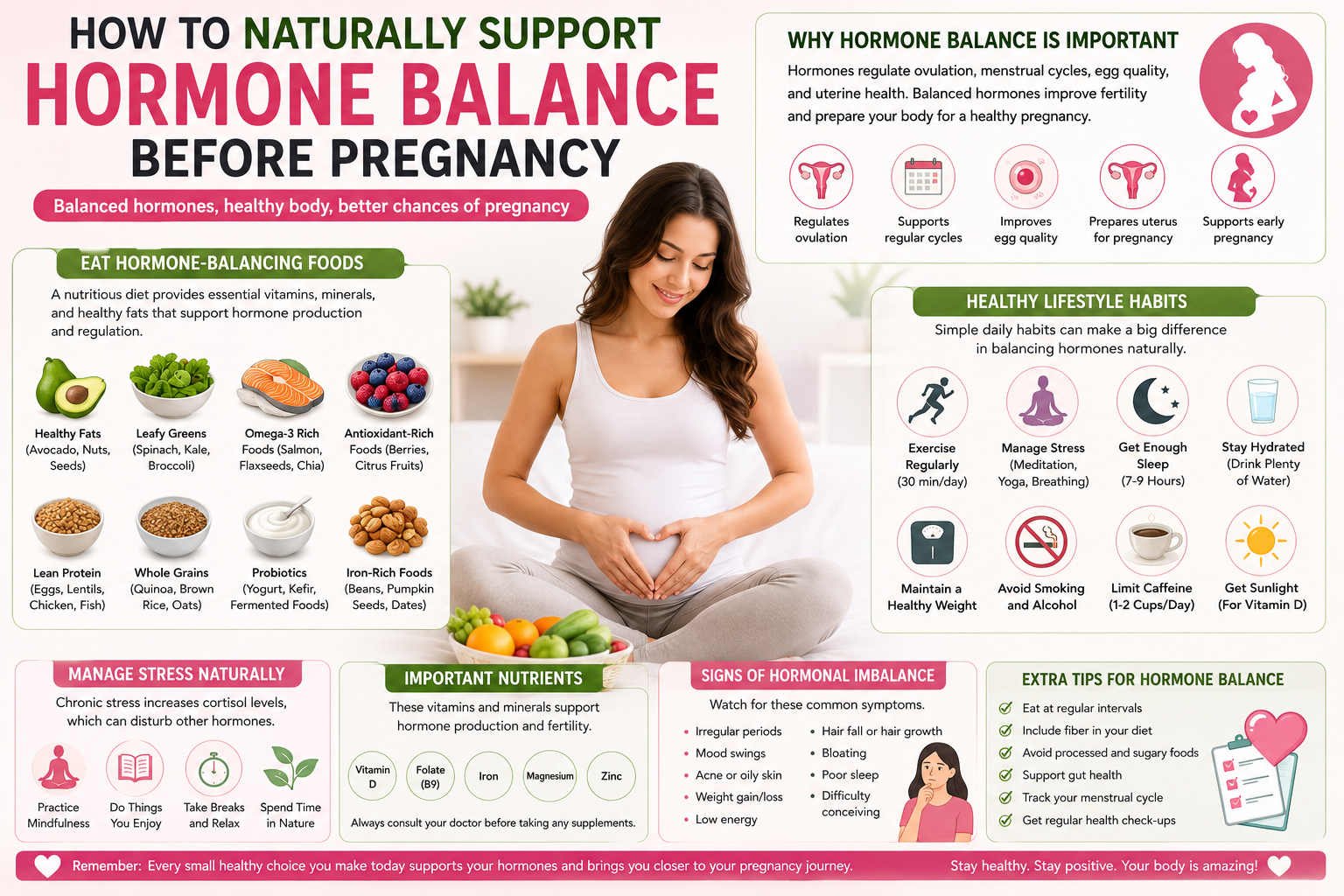
How to Naturally Support Hormone Balance Before Pregnancy
How to Naturally Support Hormone Balance Before Pregnancy
Introduction
Hormones play a vital role in a woman's reproductive health and fertility. They regulate the menstrual cycle, ovulation, egg development, and the ability to conceive naturally. When hormones are balanced, the body is better prepared for pregnancy. However, hormonal imbalances can interfere with ovulation, menstrual regularity, and overall reproductive health.
If you are planning to become pregnant, taking steps to support hormone balance naturally can help create a healthier environment for conception. A nutritious diet, regular exercise, quality sleep, stress management, and healthy lifestyle habits all contribute to optimal hormonal function.
This guide explains how to naturally support hormone balance before pregnancy and improve your overall reproductive wellness.
Why Hormone Balance Is Important Before Pregnancy
Hormones act as chemical messengers that control nearly every aspect of female reproduction.
Healthy hormone levels help regulate:
Ovulation
Menstrual cycles
Egg maturation
Uterine lining development
Implantation
Early pregnancy support
When hormones become imbalanced, fertility may be affected and pregnancy may become more difficult.
Common Hormones Involved in Female Fertility
Several hormones work together during the reproductive cycle.
Estrogen
Supports egg development and prepares the uterus for pregnancy.
Progesterone
Helps prepare the uterine lining for implantation and supports early pregnancy.
Follicle Stimulating Hormone (FSH)
Stimulates ovarian follicles and egg development.
Luteinizing Hormone (LH)
Triggers ovulation and supports reproductive function.
Thyroid Hormones
Help regulate metabolism and reproductive hormone activity.
Insulin
Supports metabolism, and abnormal insulin levels may affect ovulation.
Balanced levels of these hormones are essential for conception.
Signs of Hormonal Imbalance
Women may notice symptoms such as:
Irregular periods
Missed menstrual cycles
Heavy bleeding
Acne
Hair loss
Excess facial hair
Weight gain
Mood swings
Fatigue
Difficulty getting pregnant
Persistent symptoms should be evaluated by a healthcare professional.
Eat a Nutrient-Rich Diet
Nutrition is one of the most effective natural ways to support hormone health.
Choose foods rich in vitamins, minerals, antioxidants, and healthy fats.
Include:
Green leafy vegetables
Fresh fruits
Whole grains
Lean protein
Healthy fats
Nuts
Seeds
Legumes
A balanced diet provides the nutrients needed for hormone production.
Increase Healthy Fat Intake
Hormones are produced from cholesterol and healthy fats.
Healthy sources include:
Avocados
Olive oil
Nuts
Seeds
Fatty fish
Avoid excessive processed and trans fats.
Eat Enough Protein
Protein supports hormone production and stable blood sugar levels.
Healthy protein sources include:
Eggs
Fish
Chicken
Lentils
Beans
Greek yogurt
Tofu
Adequate protein supports reproductive health.
Maintain Stable Blood Sugar Levels
Large blood sugar fluctuations may influence insulin and reproductive hormones.
Choose:
Whole grains
Fiber-rich foods
Vegetables
Healthy snacks
Limit sugary drinks and processed sweets.
Stable blood sugar supports hormone balance.
Stay Hydrated
Water supports every metabolic process in the body.
Hydration helps:
Hormone transport
Blood circulation
Nutrient delivery
Cellular function
Drink sufficient water throughout the day.
Exercise Regularly
Moderate physical activity improves hormone regulation and metabolism.
Good options include:
Walking
Swimming
Cycling
Yoga
Strength training
Aim for at least 150 minutes of moderate exercise each week.
Avoid excessive exercise that may interfere with menstrual cycles.
Maintain a Healthy Body Weight
Both obesity and being underweight may disrupt reproductive hormones.
Healthy weight management supports:
Ovulation
Menstrual regularity
Hormone production
Fertility
A balanced diet and regular activity can help maintain a healthy BMI.
Prioritize Quality Sleep
Sleep is essential for hormone production and regulation.
Lack of sleep may affect:
Cortisol
Insulin
Reproductive hormones
Ovulation
Aim for 7–9 hours of quality sleep every night.
Create a consistent bedtime routine to improve sleep quality.
Manage Stress Naturally
Long-term stress increases cortisol levels, which may interfere with reproductive hormones.
Stress management techniques include:
Meditation
Deep breathing
Yoga
Walking
Reading
Listening to music
Managing stress supports overall reproductive health.
Get Enough Vitamin D
Vitamin D receptors are found in reproductive tissues.
Healthy vitamin D levels may support:
Ovulation
Hormone function
Fertility
Sources include:
Sunlight
Fatty fish
Egg yolks
Fortified dairy products
Discuss supplementation with your healthcare provider if needed.
Increase Iron Intake
Iron supports healthy blood production and reproductive health.
Iron-rich foods include:
Spinach
Lentils
Beans
Red meat
Pumpkin seeds
Vitamin C-rich foods improve iron absorption.
Include Omega-3 Fatty Acids
Omega-3 fats help reduce inflammation and support hormone production.
Good sources include:
Salmon
Sardines
Walnuts
Flaxseeds
Chia seeds
These healthy fats support reproductive wellness.
Support Gut Health
A healthy digestive system supports nutrient absorption and hormone metabolism.
Include:
Yogurt
Fermented foods
Fruits
Vegetables
Fiber-rich foods
Healthy gut bacteria contribute to overall wellness.
Reduce Processed Foods
Highly processed foods often contain excess sugar, unhealthy fats, and additives.
Choose natural, whole foods whenever possible to support hormonal health.
Limit Alcohol and Smoking
Smoking damages reproductive health and egg quality.
Excessive alcohol may interfere with fertility.
Avoiding these habits supports pregnancy planning.
Reduce Caffeine Intake
Moderate caffeine intake is generally considered safe, but excessive amounts may not be ideal when planning pregnancy.
Discuss individual recommendations with your healthcare provider.
Track Your Menstrual Cycle
Tracking your menstrual cycle helps identify:
Ovulation
Cycle length
Fertile window
Hormonal changes
Understanding your cycle supports pregnancy planning.
Check Thyroid Health
Thyroid hormones influence ovulation and reproductive function.
Women with symptoms such as fatigue, weight changes, or irregular periods should discuss thyroid testing with their healthcare provider.
Important Vitamins and Minerals for Hormone Balance
Essential nutrients include:
Vitamin D
Iron
Calcium
Magnesium
Zinc
Selenium
Vitamin B12
Folate
These nutrients support hormone production and reproductive health.
Medical Conditions That May Affect Hormone Balance
Certain health conditions may influence fertility hormones, including:
PCOS
Thyroid disorders
Diabetes
Endometriosis
Obesity
Autoimmune diseases
Proper medical management can support reproductive health.
When to Consult a Doctor
Seek medical advice if you experience:
Irregular menstrual cycles
Missed periods
Severe acne
Excess facial hair
Difficulty conceiving
Pelvic pain
Recurrent miscarriages
Early evaluation can help identify treatable hormonal conditions.
Daily Hormone Balance Routine Before Pregnancy
Wake up at a consistent time
Eat a nutritious breakfast
Drink plenty of water
Exercise for 30 minutes
Eat balanced meals
Manage stress with meditation or yoga
Sleep 7–9 hours
Small daily habits can support long-term reproductive health.
Conclusion
Healthy hormone balance is one of the most important factors for fertility and pregnancy preparation. Proper nutrition, regular exercise, quality sleep, stress management, hydration, and maintaining a healthy weight all contribute to better hormonal health and reproductive function.
While lifestyle changes can support hormone balance naturally, persistent symptoms or fertility concerns should be discussed with a qualified healthcare professional. Preparing your body before pregnancy with healthy habits can improve overall wellness and create a strong foundation for a healthy conception journey.
Introduction
Hormones play a vital role in a woman's reproductive health and fertility. They regulate the menstrual cycle, ovulation, egg development, and the ability to conceive naturally. When hormones are balanced, the body is better prepared for pregnancy. However, hormonal imbalances can interfere with ovulation, menstrual regularity, and overall reproductive health.
If you are planning to become pregnant, taking steps to support hormone balance naturally can help create a healthier environment for conception. A nutritious diet, regular exercise, quality sleep, stress management, and healthy lifestyle habits all contribute to optimal hormonal function.
This guide explains how to naturally support hormone balance before pregnancy and improve your overall reproductive wellness.
Why Hormone Balance Is Important Before Pregnancy
Hormones act as chemical messengers that control nearly every aspect of female reproduction.
Healthy hormone levels help regulate:
Ovulation
Menstrual cycles
Egg maturation
Uterine lining development
Implantation
Early pregnancy support
When hormones become imbalanced, fertility may be affected and pregnancy may become more difficult.
Common Hormones Involved in Female Fertility
Several hormones work together during the reproductive cycle.
Estrogen
Supports egg development and prepares the uterus for pregnancy.
Progesterone
Helps prepare the uterine lining for implantation and supports early pregnancy.
Follicle Stimulating Hormone (FSH)
Stimulates ovarian follicles and egg development.
Luteinizing Hormone (LH)
Triggers ovulation and supports reproductive function.
Thyroid Hormones
Help regulate metabolism and reproductive hormone activity.
Insulin
Supports metabolism, and abnormal insulin levels may affect ovulation.
Balanced levels of these hormones are essential for conception.
Signs of Hormonal Imbalance
Women may notice symptoms such as:
Irregular periods
Missed menstrual cycles
Heavy bleeding
Acne
Hair loss
Excess facial hair
Weight gain
Mood swings
Fatigue
Difficulty getting pregnant
Persistent symptoms should be evaluated by a healthcare professional.
Eat a Nutrient-Rich Diet
Nutrition is one of the most effective natural ways to support hormone health.
Choose foods rich in vitamins, minerals, antioxidants, and healthy fats.
Include:
Green leafy vegetables
Fresh fruits
Whole grains
Lean protein
Healthy fats
Nuts
Seeds
Legumes
A balanced diet provides the nutrients needed for hormone production.
Increase Healthy Fat Intake
Hormones are produced from cholesterol and healthy fats.
Healthy sources include:
Avocados
Olive oil
Nuts
Seeds
Fatty fish
Avoid excessive processed and trans fats.
Eat Enough Protein
Protein supports hormone production and stable blood sugar levels.
Healthy protein sources include:
Eggs
Fish
Chicken
Lentils
Beans
Greek yogurt
Tofu
Adequate protein supports reproductive health.
Maintain Stable Blood Sugar Levels
Large blood sugar fluctuations may influence insulin and reproductive hormones.
Choose:
Whole grains
Fiber-rich foods
Vegetables
Healthy snacks
Limit sugary drinks and processed sweets.
Stable blood sugar supports hormone balance.
Stay Hydrated
Water supports every metabolic process in the body.
Hydration helps:
Hormone transport
Blood circulation
Nutrient delivery
Cellular function
Drink sufficient water throughout the day.
Exercise Regularly
Moderate physical activity improves hormone regulation and metabolism.
Good options include:
Walking
Swimming
Cycling
Yoga
Strength training
Aim for at least 150 minutes of moderate exercise each week.
Avoid excessive exercise that may interfere with menstrual cycles.
Maintain a Healthy Body Weight
Both obesity and being underweight may disrupt reproductive hormones.
Healthy weight management supports:
Ovulation
Menstrual regularity
Hormone production
Fertility
A balanced diet and regular activity can help maintain a healthy BMI.
Prioritize Quality Sleep
Sleep is essential for hormone production and regulation.
Lack of sleep may affect:
Cortisol
Insulin
Reproductive hormones
Ovulation
Aim for 7–9 hours of quality sleep every night.
Create a consistent bedtime routine to improve sleep quality.
Manage Stress Naturally
Long-term stress increases cortisol levels, which may interfere with reproductive hormones.
Stress management techniques include:
Meditation
Deep breathing
Yoga
Walking
Reading
Listening to music
Managing stress supports overall reproductive health.
Get Enough Vitamin D
Vitamin D receptors are found in reproductive tissues.
Healthy vitamin D levels may support:
Ovulation
Hormone function
Fertility
Sources include:
Sunlight
Fatty fish
Egg yolks
Fortified dairy products
Discuss supplementation with your healthcare provider if needed.
Increase Iron Intake
Iron supports healthy blood production and reproductive health.
Iron-rich foods include:
Spinach
Lentils
Beans
Red meat
Pumpkin seeds
Vitamin C-rich foods improve iron absorption.
Include Omega-3 Fatty Acids
Omega-3 fats help reduce inflammation and support hormone production.
Good sources include:
Salmon
Sardines
Walnuts
Flaxseeds
Chia seeds
These healthy fats support reproductive wellness.
Support Gut Health
A healthy digestive system supports nutrient absorption and hormone metabolism.
Include:
Yogurt
Fermented foods
Fruits
Vegetables
Fiber-rich foods
Healthy gut bacteria contribute to overall wellness.
Reduce Processed Foods
Highly processed foods often contain excess sugar, unhealthy fats, and additives.
Choose natural, whole foods whenever possible to support hormonal health.
Limit Alcohol and Smoking
Smoking damages reproductive health and egg quality.
Excessive alcohol may interfere with fertility.
Avoiding these habits supports pregnancy planning.
Reduce Caffeine Intake
Moderate caffeine intake is generally considered safe, but excessive amounts may not be ideal when planning pregnancy.
Discuss individual recommendations with your healthcare provider.
Track Your Menstrual Cycle
Tracking your menstrual cycle helps identify:
Ovulation
Cycle length
Fertile window
Hormonal changes
Understanding your cycle supports pregnancy planning.
Check Thyroid Health
Thyroid hormones influence ovulation and reproductive function.
Women with symptoms such as fatigue, weight changes, or irregular periods should discuss thyroid testing with their healthcare provider.
Important Vitamins and Minerals for Hormone Balance
Essential nutrients include:
Vitamin D
Iron
Calcium
Magnesium
Zinc
Selenium
Vitamin B12
Folate
These nutrients support hormone production and reproductive health.
Medical Conditions That May Affect Hormone Balance
Certain health conditions may influence fertility hormones, including:
PCOS
Thyroid disorders
Diabetes
Endometriosis
Obesity
Autoimmune diseases
Proper medical management can support reproductive health.
When to Consult a Doctor
Seek medical advice if you experience:
Irregular menstrual cycles
Missed periods
Severe acne
Excess facial hair
Difficulty conceiving
Pelvic pain
Recurrent miscarriages
Early evaluation can help identify treatable hormonal conditions.
Daily Hormone Balance Routine Before Pregnancy
Wake up at a consistent time
Eat a nutritious breakfast
Drink plenty of water
Exercise for 30 minutes
Eat balanced meals
Manage stress with meditation or yoga
Sleep 7–9 hours
Small daily habits can support long-term reproductive health.
Conclusion
Healthy hormone balance is one of the most important factors for fertility and pregnancy preparation. Proper nutrition, regular exercise, quality sleep, stress management, hydration, and maintaining a healthy weight all contribute to better hormonal health and reproductive function.
While lifestyle changes can support hormone balance naturally, persistent symptoms or fertility concerns should be discussed with a qualified healthcare professional. Preparing your body before pregnancy with healthy habits can improve overall wellness and create a strong foundation for a healthy conception journey.