
How to Increase Egg Quality Naturally
Shop through our latest selection of Fashion
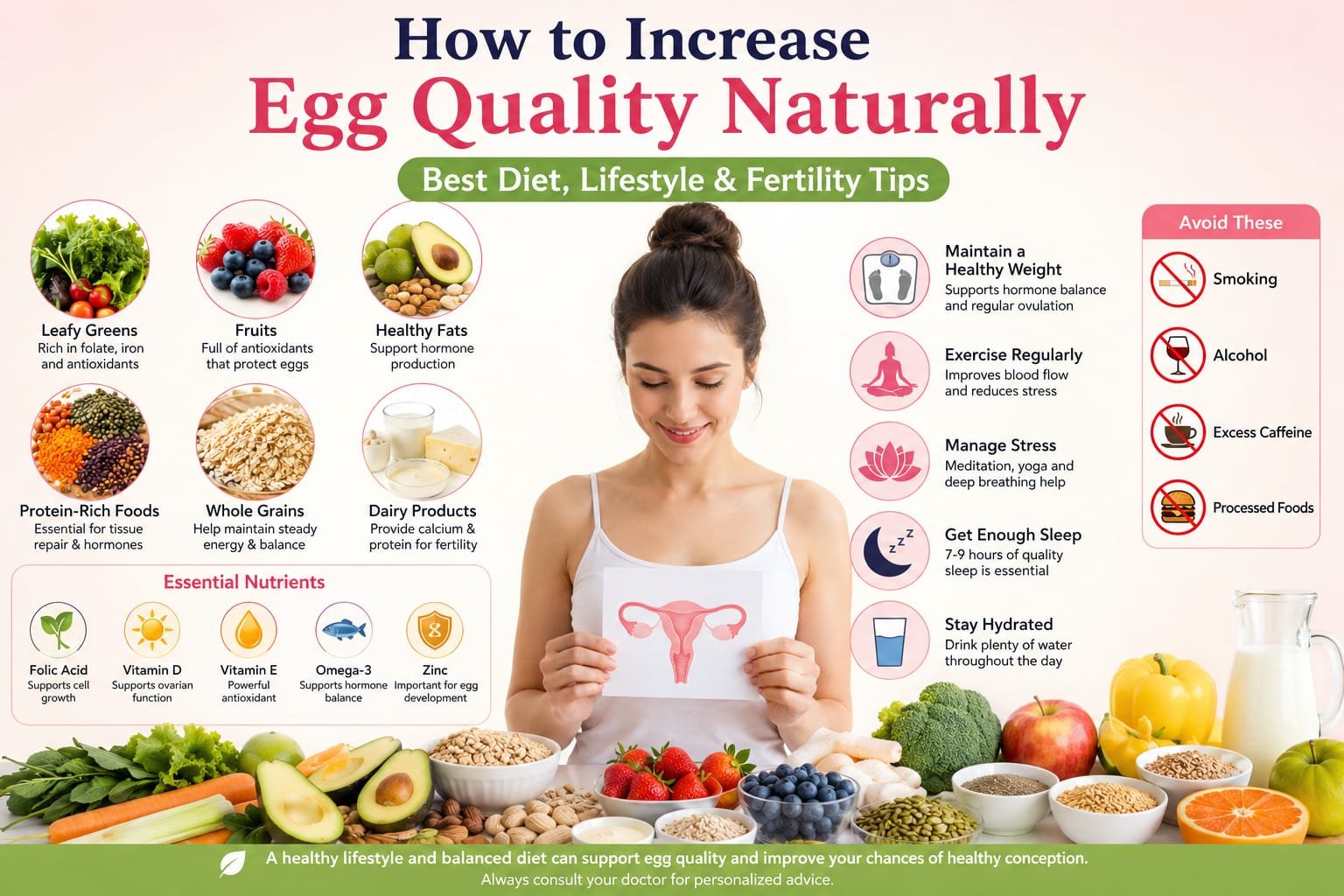
How to Increase Egg Quality Naturally
How to Increase Egg Quality Naturally: Best Diet, Lifestyle & Fertility Tips
Introduction
Egg quality plays an important role in a woman’s fertility and the chances of a healthy pregnancy. Healthy eggs have a better chance of being fertilized and developing into a healthy embryo. While age is one of the biggest factors affecting egg quality, nutrition, lifestyle, sleep, stress management, and overall health can also support reproductive wellness.
Many women wonder if they can improve egg quality naturally. Although no natural method can reverse age-related changes, healthy habits may support ovarian function and overall fertility. This article explains the best natural ways to improve egg quality through diet, vitamins, and lifestyle changes.
What Is Egg Quality?
Egg quality refers to the health and ability of an egg to be fertilized and develop into a healthy embryo. Good egg quality is associated with normal chromosomes and healthy cell function, which are important for conception and pregnancy.
Egg quality naturally declines with age, especially after the age of 35. However, maintaining a healthy lifestyle may help support reproductive health.
Factors That Affect Egg Quality
Several factors can influence egg quality, including:
Increasing age
Poor nutrition
Smoking
Alcohol consumption
Chronic stress
Lack of sleep
Obesity
Hormonal imbalance
PCOS and thyroid disorders
Environmental toxins
Understanding these factors can help women make healthier choices while trying to conceive.
Best Foods to Increase Egg Quality Naturally
A nutrient-rich diet supports overall reproductive health. Include these foods regularly:
1. Leafy Green Vegetables
Spinach, kale, and broccoli provide folate, iron, and antioxidants that support healthy cells.
2. Fresh Fruits
Berries, oranges, kiwi, and pomegranate contain antioxidants that help protect eggs from oxidative stress.
3. Healthy Fats
Avocados, nuts, olive oil, and seeds provide healthy fats important for hormone production.
4. Protein-Rich Foods
Eggs, lentils, beans, fish, tofu, and lean chicken support tissue repair and hormone balance.
5. Whole Grains
Brown rice, oats, quinoa, and whole wheat provide steady energy and help regulate blood sugar.
6. Dairy Products
Milk, yogurt, and cheese provide calcium and protein that support reproductive health.
Vitamins That Support Egg Quality
Certain vitamins and minerals are essential for fertility.
Vitamin D
Supports reproductive hormone function and ovarian health.
Folic Acid
Important before conception and supports healthy cell growth.
Vitamin E
Acts as an antioxidant and supports healthy reproductive tissues.
Vitamin C
Helps reduce oxidative stress and supports overall fertility.
Omega-3 Fatty Acids
Found in walnuts, flaxseeds, and fatty fish, omega-3 supports hormone balance.
Zinc
Supports healthy egg development and reproductive function.
Always discuss supplements with a healthcare professional before starting them.
Stay Hydrated
Drinking enough water supports circulation and overall reproductive health. Aim for 2–3 liters daily unless advised otherwise by your doctor.
Maintain a Healthy Weight
Both overweight and underweight women may experience hormone imbalance and irregular ovulation.
A healthy body weight supports:
Regular menstrual cycles
Hormone balance
Better ovulation
Improved fertility
Exercise Regularly
Moderate physical activity improves blood circulation and overall health.
Good options include:
Walking
Yoga
Swimming
Cycling
Light strength training
Avoid excessive exercise, which may interfere with ovulation in some women.
Manage Stress
High stress levels may affect hormones involved in reproduction.
Stress management techniques include:
Meditation
Deep breathing
Yoga
Reading
Spending time outdoors
Adequate rest
Reducing stress supports overall reproductive wellness.
Get Enough Sleep
Quality sleep helps regulate hormones important for fertility.
Aim for 7–9 hours of sleep each night and maintain a regular sleep schedule.
Avoid Smoking and Alcohol
Smoking damages egg cells and may reduce fertility. Excess alcohol can also negatively affect reproductive health.
Avoiding these habits supports overall fertility and pregnancy health.
Reduce Processed Foods and Sugar
Highly processed foods and sugary drinks may contribute to inflammation and metabolic problems.
Choose:
Fresh vegetables
Fruits
Whole grains
Lean proteins
Healthy fats
instead of processed snacks and sugary beverages.
Limit Caffeine
Moderate caffeine intake is generally considered acceptable for most adults, but excessive intake may not be ideal when trying to conceive. Discuss your individual situation with your healthcare provider.
Environmental Toxins
Reducing exposure to pesticides, harmful chemicals, and cigarette smoke may support reproductive health.
Use:
Glass containers instead of plastic when possible
Fresh foods
Natural household products when practical
Can Egg Quality Improve Naturally?
Healthy lifestyle habits may support overall egg health and reproductive function, but age-related decline in egg quality cannot be completely reversed. Focusing on nutrition, exercise, stress management, sleep, and avoiding harmful habits can contribute to better reproductive wellness.
When to See a Fertility Specialist
Consult a healthcare professional if:
You are under 35 and have tried to conceive for 12 months without success.
You are 35 or older and have tried for 6 months without success.
You have irregular periods.
You have PCOS, thyroid disease, or endometriosis.
You have experienced recurrent pregnancy loss.
Early evaluation can help identify possible causes and treatment options.
Conclusion
Supporting egg quality naturally starts with a balanced diet, regular exercise, stress management, quality sleep, and healthy lifestyle choices. While age remains an important factor, adopting these habits can promote overall reproductive health and prepare the body for pregnancy.
If you have concerns about fertility or difficulty conceiving, seek advice from a qualified healthcare professional for personalized evaluation and guidance.
Introduction
Egg quality plays an important role in a woman’s fertility and the chances of a healthy pregnancy. Healthy eggs have a better chance of being fertilized and developing into a healthy embryo. While age is one of the biggest factors affecting egg quality, nutrition, lifestyle, sleep, stress management, and overall health can also support reproductive wellness.
Many women wonder if they can improve egg quality naturally. Although no natural method can reverse age-related changes, healthy habits may support ovarian function and overall fertility. This article explains the best natural ways to improve egg quality through diet, vitamins, and lifestyle changes.
What Is Egg Quality?
Egg quality refers to the health and ability of an egg to be fertilized and develop into a healthy embryo. Good egg quality is associated with normal chromosomes and healthy cell function, which are important for conception and pregnancy.
Egg quality naturally declines with age, especially after the age of 35. However, maintaining a healthy lifestyle may help support reproductive health.
Factors That Affect Egg Quality
Several factors can influence egg quality, including:
Increasing age
Poor nutrition
Smoking
Alcohol consumption
Chronic stress
Lack of sleep
Obesity
Hormonal imbalance
PCOS and thyroid disorders
Environmental toxins
Understanding these factors can help women make healthier choices while trying to conceive.
Best Foods to Increase Egg Quality Naturally
A nutrient-rich diet supports overall reproductive health. Include these foods regularly:
1. Leafy Green Vegetables
Spinach, kale, and broccoli provide folate, iron, and antioxidants that support healthy cells.
2. Fresh Fruits
Berries, oranges, kiwi, and pomegranate contain antioxidants that help protect eggs from oxidative stress.
3. Healthy Fats
Avocados, nuts, olive oil, and seeds provide healthy fats important for hormone production.
4. Protein-Rich Foods
Eggs, lentils, beans, fish, tofu, and lean chicken support tissue repair and hormone balance.
5. Whole Grains
Brown rice, oats, quinoa, and whole wheat provide steady energy and help regulate blood sugar.
6. Dairy Products
Milk, yogurt, and cheese provide calcium and protein that support reproductive health.
Vitamins That Support Egg Quality
Certain vitamins and minerals are essential for fertility.
Vitamin D
Supports reproductive hormone function and ovarian health.
Folic Acid
Important before conception and supports healthy cell growth.
Vitamin E
Acts as an antioxidant and supports healthy reproductive tissues.
Vitamin C
Helps reduce oxidative stress and supports overall fertility.
Omega-3 Fatty Acids
Found in walnuts, flaxseeds, and fatty fish, omega-3 supports hormone balance.
Zinc
Supports healthy egg development and reproductive function.
Always discuss supplements with a healthcare professional before starting them.
Stay Hydrated
Drinking enough water supports circulation and overall reproductive health. Aim for 2–3 liters daily unless advised otherwise by your doctor.
Maintain a Healthy Weight
Both overweight and underweight women may experience hormone imbalance and irregular ovulation.
A healthy body weight supports:
Regular menstrual cycles
Hormone balance
Better ovulation
Improved fertility
Exercise Regularly
Moderate physical activity improves blood circulation and overall health.
Good options include:
Walking
Yoga
Swimming
Cycling
Light strength training
Avoid excessive exercise, which may interfere with ovulation in some women.
Manage Stress
High stress levels may affect hormones involved in reproduction.
Stress management techniques include:
Meditation
Deep breathing
Yoga
Reading
Spending time outdoors
Adequate rest
Reducing stress supports overall reproductive wellness.
Get Enough Sleep
Quality sleep helps regulate hormones important for fertility.
Aim for 7–9 hours of sleep each night and maintain a regular sleep schedule.
Avoid Smoking and Alcohol
Smoking damages egg cells and may reduce fertility. Excess alcohol can also negatively affect reproductive health.
Avoiding these habits supports overall fertility and pregnancy health.
Reduce Processed Foods and Sugar
Highly processed foods and sugary drinks may contribute to inflammation and metabolic problems.
Choose:
Fresh vegetables
Fruits
Whole grains
Lean proteins
Healthy fats
instead of processed snacks and sugary beverages.
Limit Caffeine
Moderate caffeine intake is generally considered acceptable for most adults, but excessive intake may not be ideal when trying to conceive. Discuss your individual situation with your healthcare provider.
Environmental Toxins
Reducing exposure to pesticides, harmful chemicals, and cigarette smoke may support reproductive health.
Use:
Glass containers instead of plastic when possible
Fresh foods
Natural household products when practical
Can Egg Quality Improve Naturally?
Healthy lifestyle habits may support overall egg health and reproductive function, but age-related decline in egg quality cannot be completely reversed. Focusing on nutrition, exercise, stress management, sleep, and avoiding harmful habits can contribute to better reproductive wellness.
When to See a Fertility Specialist
Consult a healthcare professional if:
You are under 35 and have tried to conceive for 12 months without success.
You are 35 or older and have tried for 6 months without success.
You have irregular periods.
You have PCOS, thyroid disease, or endometriosis.
You have experienced recurrent pregnancy loss.
Early evaluation can help identify possible causes and treatment options.
Conclusion
Supporting egg quality naturally starts with a balanced diet, regular exercise, stress management, quality sleep, and healthy lifestyle choices. While age remains an important factor, adopting these habits can promote overall reproductive health and prepare the body for pregnancy.
If you have concerns about fertility or difficulty conceiving, seek advice from a qualified healthcare professional for personalized evaluation and guidance.