
Female Infertility Explained: From Causes to Diagnosis and Treatment
Shop through our latest selection of Fashion
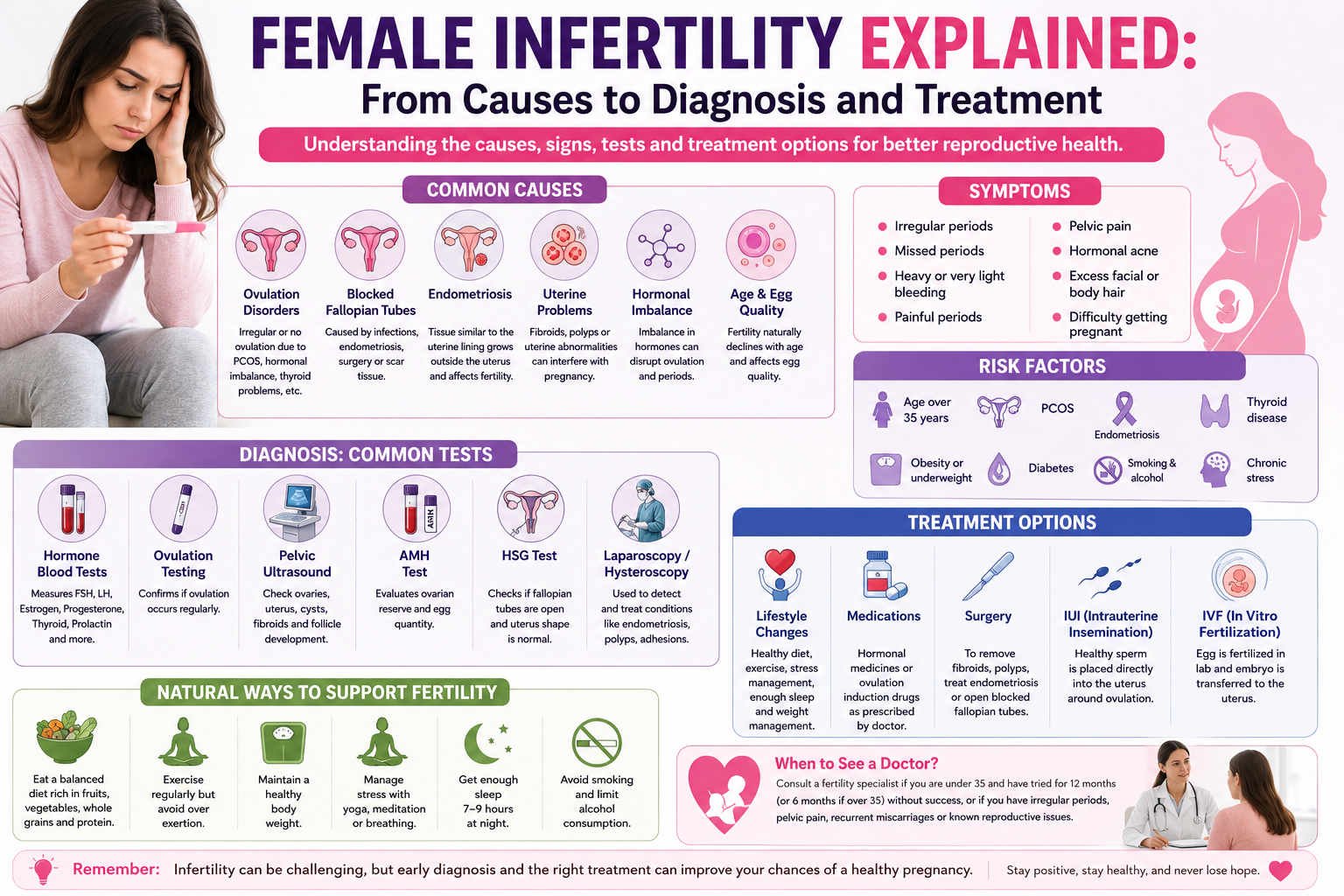
Female Infertility Explained: From Causes to Diagnosis and Treatment
Female Infertility Explained: From Causes to Diagnosis and Treatment
Introduction
Female infertility is a growing health concern that affects millions of women worldwide. It is generally defined as the inability to conceive after 12 months of regular, unprotected intercourse if a woman is under 35 years old, or after 6 months if she is 35 or older. Infertility can be caused by problems related to ovulation, hormone imbalance, the uterus, fallopian tubes, ovaries, or other medical conditions.
The good news is that many causes of female infertility can be diagnosed and treated with medical care and healthy lifestyle changes. Understanding the reasons behind infertility can help women seek timely treatment and improve their chances of pregnancy.
What Is Female Infertility?
Female infertility occurs when a woman's reproductive system cannot support conception or pregnancy. A successful pregnancy requires:
Healthy ovaries
Good egg quality
Regular ovulation
Open fallopian tubes
Healthy uterus
Balanced reproductive hormones
If any of these processes are disrupted, fertility may be affected.
Common Causes of Female Infertility
1. Ovulation Disorders
Ovulation problems are among the leading causes of infertility. If an egg is not released regularly, pregnancy cannot occur naturally.
Common causes include:
Polycystic Ovary Syndrome (PCOS)
Hormonal imbalance
Thyroid disorders
High prolactin levels
2. Age-Related Fertility Decline
Female fertility naturally declines with age, especially after 35 years. Both the number and quality of eggs decrease over time, making conception more difficult.
3. Blocked Fallopian Tubes
The fallopian tubes allow sperm to meet the egg. If the tubes are blocked, fertilization cannot occur.
Possible causes include:
Pelvic infections
Endometriosis
Previous abdominal surgery
Scar tissue
4. Endometriosis
Endometriosis occurs when tissue similar to the uterine lining grows outside the uterus, causing inflammation and scarring that may reduce fertility.
5. Uterine Conditions
Conditions affecting the uterus include:
Fibroids
Polyps
Congenital uterine abnormalities
Scar tissue
These conditions may interfere with implantation or pregnancy.
6. Hormonal Imbalance
Hormones control ovulation and menstrual cycles. Imbalances may prevent normal egg release and reduce fertility.
7. Poor Egg Quality
As women age, egg quality naturally declines. Certain medical conditions and lifestyle factors may also affect egg health.
Symptoms of Female Infertility
Some women have no obvious symptoms besides difficulty conceiving. Others may notice:
Irregular periods
Missed menstrual cycles
Heavy bleeding
Very light periods
Pelvic pain
Painful periods
Hormonal acne
Excess facial hair
Weight changes
Persistent menstrual irregularities should be evaluated by a healthcare provider.
Risk Factors for Female Infertility
Several factors can increase infertility risk:
Age over 35
PCOS
Endometriosis
Thyroid disease
Diabetes
Obesity
Underweight
Smoking
Excess alcohol
Chronic stress
Poor nutrition
Family history of infertility
How Is Female Infertility Diagnosed?
Doctors use medical history, physical examination, and laboratory tests to identify possible fertility problems.
Hormone Blood Tests
These tests measure:
FSH
LH
Estrogen
Progesterone
Thyroid hormones
Prolactin
Hormone testing helps evaluate ovulation and reproductive function.
Ovulation Testing
Ovulation can be confirmed using:
Blood progesterone levels
Ovulation predictor kits
Basal body temperature tracking
Ultrasound monitoring
AMH Test
The Anti-Müllerian Hormone (AMH) test measures ovarian reserve and estimates the remaining egg supply.
Pelvic Ultrasound
Ultrasound examines:
Ovaries
Uterus
Fibroids
Ovarian cysts
Follicle development
HSG Test
Hysterosalpingography (HSG) checks whether the fallopian tubes are open and whether the uterus has a normal shape.
Hysteroscopy and Laparoscopy
These procedures allow doctors to examine the uterus and pelvic organs when conditions like endometriosis or uterine abnormalities are suspected.
Treatment Options for Female Infertility
Treatment depends on the underlying cause.
Lifestyle Changes
Simple lifestyle improvements may support reproductive health:
Eat a balanced diet
Exercise regularly
Maintain healthy body weight
Sleep 7–9 hours
Reduce stress
Avoid smoking
Limit alcohol intake
Fertility Medications
Doctors may prescribe medications that stimulate ovulation or correct hormone imbalances.
Treatment is individualized based on the diagnosis.
Surgery
Surgery may be recommended to treat:
Fibroids
Endometriosis
Polyps
Blocked fallopian tubes
Correcting structural problems may improve fertility.
Assisted Reproductive Technology (ART)
Advanced fertility treatments include:
Intrauterine Insemination (IUI)
Specially prepared sperm are placed directly inside the uterus.
In Vitro Fertilization (IVF)
Eggs are fertilized in a laboratory before embryo transfer into the uterus.
These options may be considered when other treatments are unsuccessful.
Natural Ways to Support Female Fertility
Although natural methods cannot treat every cause of infertility, healthy habits support reproductive health.
Eat Fertility-Friendly Foods
Choose foods rich in:
Fruits
Vegetables
Whole grains
Lean protein
Healthy fats
Nuts and seeds
Proper nutrition supports hormone production and overall health.
Stay Physically Active
Moderate exercise helps maintain healthy weight and hormone balance.
Good options include:
Walking
Yoga
Swimming
Cycling
Maintain Healthy Weight
Being overweight or underweight may interfere with ovulation.
Healthy body weight supports reproductive hormones.
Manage Stress
Chronic stress may affect reproductive hormone regulation.
Relaxation techniques include:
Meditation
Deep breathing
Yoga
Reading
Spending time outdoors
Get Enough Sleep
Quality sleep supports hormonal balance and overall reproductive health.
Aim for 7–9 hours every night.
Avoid Smoking and Excess Alcohol
Smoking damages egg quality and reproductive health.
Limiting alcohol supports fertility and pregnancy planning.
Can Female Infertility Be Prevented?
Some causes cannot be prevented, especially age-related decline or genetic conditions. However, healthy habits may lower certain risks by:
Maintaining healthy weight
Eating nutritious foods
Staying active
Managing stress
Avoiding smoking
Limiting alcohol
Treating medical conditions early
When Should You See a Fertility Specialist?
Consult a fertility specialist if:
You are under 35 and have tried to conceive for one year.
You are over 35 and have tried for six months.
You have irregular periods.
You have repeated miscarriages.
You have PCOS or endometriosis.
You have pelvic pain or previous pelvic infections.
Early evaluation can improve treatment options.
Conclusion
Female infertility can result from ovulation disorders, hormonal imbalance, uterine conditions, blocked fallopian tubes, endometriosis, age-related changes, and lifestyle factors. Modern diagnostic tests and fertility treatments have helped many women successfully conceive.
Maintaining a healthy lifestyle, seeking early medical evaluation, and following appropriate treatment recommendations can improve reproductive health and pregnancy chances. If you are experiencing fertility concerns, consulting a qualified healthcare professional is the best step toward understanding your options and planning the right care.
Introduction
Female infertility is a growing health concern that affects millions of women worldwide. It is generally defined as the inability to conceive after 12 months of regular, unprotected intercourse if a woman is under 35 years old, or after 6 months if she is 35 or older. Infertility can be caused by problems related to ovulation, hormone imbalance, the uterus, fallopian tubes, ovaries, or other medical conditions.
The good news is that many causes of female infertility can be diagnosed and treated with medical care and healthy lifestyle changes. Understanding the reasons behind infertility can help women seek timely treatment and improve their chances of pregnancy.
What Is Female Infertility?
Female infertility occurs when a woman's reproductive system cannot support conception or pregnancy. A successful pregnancy requires:
Healthy ovaries
Good egg quality
Regular ovulation
Open fallopian tubes
Healthy uterus
Balanced reproductive hormones
If any of these processes are disrupted, fertility may be affected.
Common Causes of Female Infertility
1. Ovulation Disorders
Ovulation problems are among the leading causes of infertility. If an egg is not released regularly, pregnancy cannot occur naturally.
Common causes include:
Polycystic Ovary Syndrome (PCOS)
Hormonal imbalance
Thyroid disorders
High prolactin levels
2. Age-Related Fertility Decline
Female fertility naturally declines with age, especially after 35 years. Both the number and quality of eggs decrease over time, making conception more difficult.
3. Blocked Fallopian Tubes
The fallopian tubes allow sperm to meet the egg. If the tubes are blocked, fertilization cannot occur.
Possible causes include:
Pelvic infections
Endometriosis
Previous abdominal surgery
Scar tissue
4. Endometriosis
Endometriosis occurs when tissue similar to the uterine lining grows outside the uterus, causing inflammation and scarring that may reduce fertility.
5. Uterine Conditions
Conditions affecting the uterus include:
Fibroids
Polyps
Congenital uterine abnormalities
Scar tissue
These conditions may interfere with implantation or pregnancy.
6. Hormonal Imbalance
Hormones control ovulation and menstrual cycles. Imbalances may prevent normal egg release and reduce fertility.
7. Poor Egg Quality
As women age, egg quality naturally declines. Certain medical conditions and lifestyle factors may also affect egg health.
Symptoms of Female Infertility
Some women have no obvious symptoms besides difficulty conceiving. Others may notice:
Irregular periods
Missed menstrual cycles
Heavy bleeding
Very light periods
Pelvic pain
Painful periods
Hormonal acne
Excess facial hair
Weight changes
Persistent menstrual irregularities should be evaluated by a healthcare provider.
Risk Factors for Female Infertility
Several factors can increase infertility risk:
Age over 35
PCOS
Endometriosis
Thyroid disease
Diabetes
Obesity
Underweight
Smoking
Excess alcohol
Chronic stress
Poor nutrition
Family history of infertility
How Is Female Infertility Diagnosed?
Doctors use medical history, physical examination, and laboratory tests to identify possible fertility problems.
Hormone Blood Tests
These tests measure:
FSH
LH
Estrogen
Progesterone
Thyroid hormones
Prolactin
Hormone testing helps evaluate ovulation and reproductive function.
Ovulation Testing
Ovulation can be confirmed using:
Blood progesterone levels
Ovulation predictor kits
Basal body temperature tracking
Ultrasound monitoring
AMH Test
The Anti-Müllerian Hormone (AMH) test measures ovarian reserve and estimates the remaining egg supply.
Pelvic Ultrasound
Ultrasound examines:
Ovaries
Uterus
Fibroids
Ovarian cysts
Follicle development
HSG Test
Hysterosalpingography (HSG) checks whether the fallopian tubes are open and whether the uterus has a normal shape.
Hysteroscopy and Laparoscopy
These procedures allow doctors to examine the uterus and pelvic organs when conditions like endometriosis or uterine abnormalities are suspected.
Treatment Options for Female Infertility
Treatment depends on the underlying cause.
Lifestyle Changes
Simple lifestyle improvements may support reproductive health:
Eat a balanced diet
Exercise regularly
Maintain healthy body weight
Sleep 7–9 hours
Reduce stress
Avoid smoking
Limit alcohol intake
Fertility Medications
Doctors may prescribe medications that stimulate ovulation or correct hormone imbalances.
Treatment is individualized based on the diagnosis.
Surgery
Surgery may be recommended to treat:
Fibroids
Endometriosis
Polyps
Blocked fallopian tubes
Correcting structural problems may improve fertility.
Assisted Reproductive Technology (ART)
Advanced fertility treatments include:
Intrauterine Insemination (IUI)
Specially prepared sperm are placed directly inside the uterus.
In Vitro Fertilization (IVF)
Eggs are fertilized in a laboratory before embryo transfer into the uterus.
These options may be considered when other treatments are unsuccessful.
Natural Ways to Support Female Fertility
Although natural methods cannot treat every cause of infertility, healthy habits support reproductive health.
Eat Fertility-Friendly Foods
Choose foods rich in:
Fruits
Vegetables
Whole grains
Lean protein
Healthy fats
Nuts and seeds
Proper nutrition supports hormone production and overall health.
Stay Physically Active
Moderate exercise helps maintain healthy weight and hormone balance.
Good options include:
Walking
Yoga
Swimming
Cycling
Maintain Healthy Weight
Being overweight or underweight may interfere with ovulation.
Healthy body weight supports reproductive hormones.
Manage Stress
Chronic stress may affect reproductive hormone regulation.
Relaxation techniques include:
Meditation
Deep breathing
Yoga
Reading
Spending time outdoors
Get Enough Sleep
Quality sleep supports hormonal balance and overall reproductive health.
Aim for 7–9 hours every night.
Avoid Smoking and Excess Alcohol
Smoking damages egg quality and reproductive health.
Limiting alcohol supports fertility and pregnancy planning.
Can Female Infertility Be Prevented?
Some causes cannot be prevented, especially age-related decline or genetic conditions. However, healthy habits may lower certain risks by:
Maintaining healthy weight
Eating nutritious foods
Staying active
Managing stress
Avoiding smoking
Limiting alcohol
Treating medical conditions early
When Should You See a Fertility Specialist?
Consult a fertility specialist if:
You are under 35 and have tried to conceive for one year.
You are over 35 and have tried for six months.
You have irregular periods.
You have repeated miscarriages.
You have PCOS or endometriosis.
You have pelvic pain or previous pelvic infections.
Early evaluation can improve treatment options.
Conclusion
Female infertility can result from ovulation disorders, hormonal imbalance, uterine conditions, blocked fallopian tubes, endometriosis, age-related changes, and lifestyle factors. Modern diagnostic tests and fertility treatments have helped many women successfully conceive.
Maintaining a healthy lifestyle, seeking early medical evaluation, and following appropriate treatment recommendations can improve reproductive health and pregnancy chances. If you are experiencing fertility concerns, consulting a qualified healthcare professional is the best step toward understanding your options and planning the right care.