
Best Fertility Tests for Women: When Should You Get Checked?
Shop through our latest selection of Fashion
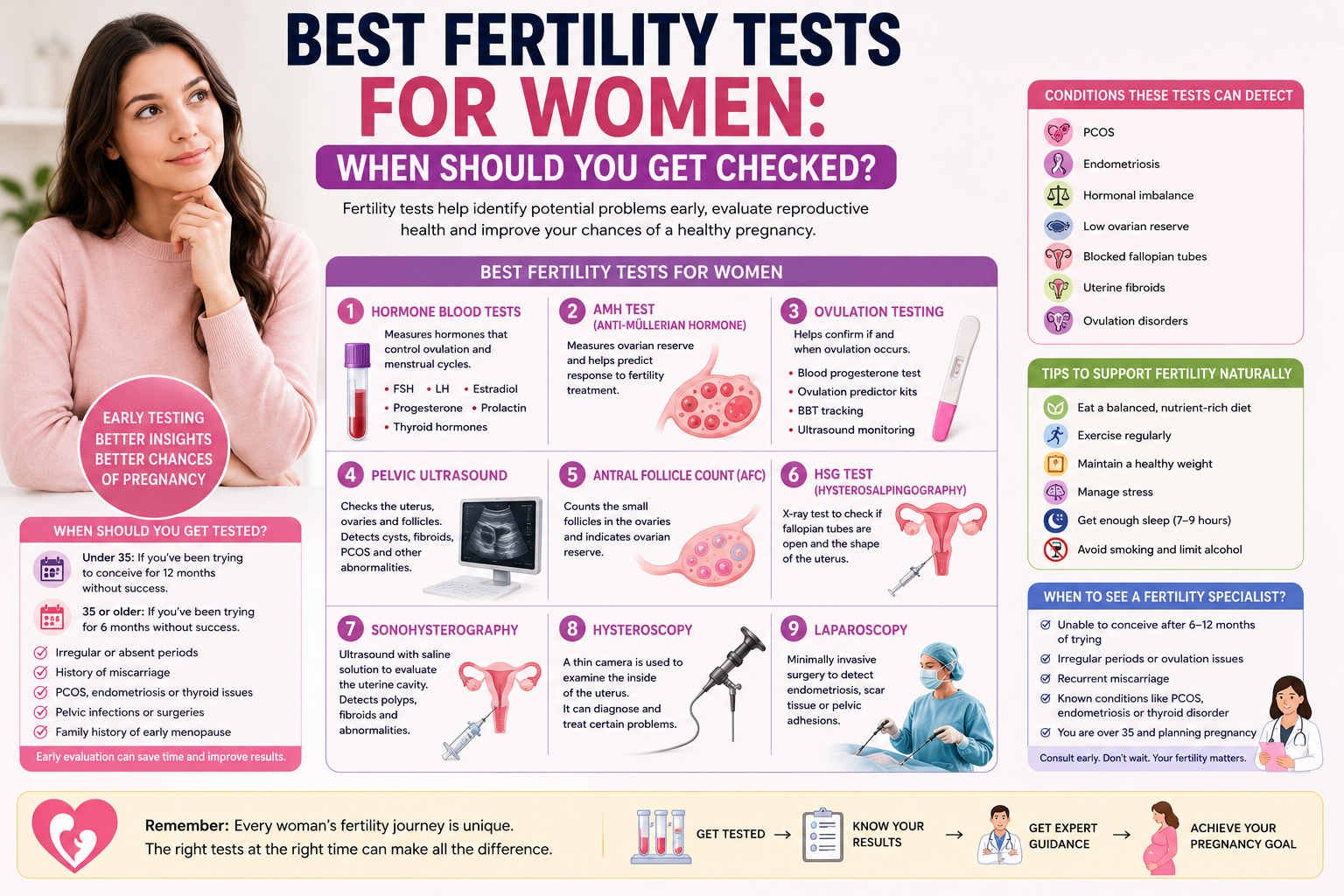
Best Fertility Tests for Women: When Should You Get Checked?
Best Fertility Tests for Women: When Should You Get Checked?
Introduction
Female fertility depends on many factors, including age, hormone levels, ovulation, ovarian reserve, and the health of the reproductive organs. While many women conceive naturally without difficulty, some may experience delays due to underlying fertility issues. Fertility testing can help identify potential problems early and guide appropriate treatment or lifestyle changes.
If you have been trying to conceive without success or have irregular menstrual cycles, fertility testing may provide valuable information about your reproductive health. Early diagnosis can improve the chances of successful pregnancy and help couples make informed decisions.
This guide explains the best fertility tests for women, when to get checked, and what each test can reveal about your fertility.
Why Are Fertility Tests Important?
Fertility tests evaluate the health of a woman's reproductive system and help identify conditions that may interfere with conception.
These tests can assess:
Ovulation
Hormone levels
Ovarian reserve
Uterine health
Fallopian tube function
Overall reproductive health
Finding problems early may allow timely treatment and improve pregnancy chances.
When Should You Get a Fertility Checkup?
Doctors generally recommend fertility testing if:
You are under 35 and have tried to conceive for 12 months without success.
You are 35 years or older and have tried for 6 months without success.
You have irregular or absent periods.
You have a history of miscarriage.
You have PCOS, endometriosis, or thyroid disorders.
You have had pelvic infections or surgery.
You have a family history of early menopause.
Women planning pregnancy after age 35 may also consider an early fertility evaluation.
Common Fertility Tests for Women
Several tests may be recommended depending on your symptoms and medical history.
1. Hormone Blood Tests
Hormone tests measure reproductive hormones that control ovulation and menstrual cycles.
Common hormones tested include:
FSH (Follicle Stimulating Hormone)
LH (Luteinizing Hormone)
Estradiol
Progesterone
Prolactin
Thyroid hormones
Abnormal hormone levels may indicate ovulation problems or hormonal imbalance affecting fertility.
2. AMH Test (Anti-Müllerian Hormone)
The AMH test measures ovarian reserve, which reflects the remaining number of eggs in the ovaries.
The test helps estimate:
Egg reserve
Response to fertility treatment
Reproductive potential
Although AMH provides useful information, it does not predict the ability to become pregnant on its own.
3. Ovulation Testing
Regular ovulation is essential for pregnancy.
Ovulation testing may include:
Blood progesterone test
Urine ovulation predictor kits
Basal body temperature tracking
Ultrasound monitoring
These tests help determine whether ovulation occurs regularly.
4. Pelvic Ultrasound
A pelvic ultrasound uses sound waves to examine reproductive organs.
It can detect:
Ovarian cysts
Fibroids
PCOS
Endometriosis signs
Uterine abnormalities
Follicle development
Ultrasound is a common and non-invasive fertility investigation.
5. Antral Follicle Count (AFC)
This ultrasound test counts the small follicles inside the ovaries.
It provides information about:
Ovarian reserve
Response to fertility medications
Egg supply
The test is usually performed during the early menstrual cycle.
6. HSG Test (Hysterosalpingography)
The HSG test checks whether the fallopian tubes are open and whether the uterus has a normal shape.
During the procedure:
A special dye is injected into the uterus.
X-ray images track the flow of the dye.
Blocked fallopian tubes may prevent sperm from reaching the egg.
7. Sonohysterography
This procedure uses sterile saline solution and ultrasound imaging to evaluate the uterine cavity.
It helps detect:
Polyps
Fibroids
Scar tissue
Uterine abnormalities
These conditions may interfere with implantation.
8. Hysteroscopy
Hysteroscopy allows doctors to examine the inside of the uterus using a thin camera.
It can diagnose and sometimes treat:
Polyps
Fibroids
Adhesions
Uterine abnormalities
This procedure may improve fertility in selected cases.
9. Laparoscopy
Laparoscopy is a minimally invasive surgical procedure used when endometriosis or pelvic disease is suspected.
It can identify:
Endometriosis
Scar tissue
Pelvic adhesions
Tubal disease
It is usually recommended only when necessary.
Fertility Testing and Age
Female fertility naturally declines with age.
Women over 35 experience a gradual reduction in:
Egg quantity
Egg quality
Ovarian reserve
Fertility evaluation becomes increasingly important as age advances.
Early assessment allows better planning for pregnancy.
Conditions Fertility Tests Can Detect
Fertility investigations may identify conditions such as:
PCOS
Endometriosis
Thyroid disorders
Hormonal imbalance
Low ovarian reserve
Blocked fallopian tubes
Fibroids
Uterine abnormalities
Ovulation disorders
Identifying these conditions helps guide appropriate treatment.
How to Prepare for Fertility Testing
Before testing:
Share your complete medical history.
Record menstrual cycle details.
List current medications.
Inform your doctor about previous pregnancies or miscarriages.
Maintain a healthy lifestyle.
Preparation helps ensure accurate evaluation.
Lifestyle Habits That Support Fertility
Healthy habits support reproductive health alongside medical evaluation.
Eat a Balanced Diet
Include:
Fruits
Vegetables
Whole grains
Lean proteins
Healthy fats
Exercise Regularly
Moderate physical activity supports hormone balance and overall health.
Examples include:
Walking
Yoga
Swimming
Cycling
Maintain a Healthy Weight
Both obesity and being underweight can affect ovulation and fertility.
Get Enough Sleep
Aim for 7–9 hours of quality sleep each night.
Sleep supports hormone regulation and reproductive health.
Manage Stress
Stress may affect menstrual cycles and reproductive hormones.
Helpful strategies include:
Meditation
Deep breathing
Yoga
Regular relaxation
Avoid Smoking and Excess Alcohol
Smoking and excessive alcohol use may reduce fertility and increase pregnancy complications.
When Should You See a Fertility Specialist?
Consult a fertility specialist if:
You are unable to conceive after recommended timeframes.
You have irregular periods.
You have recurrent pregnancy loss.
You have PCOS or endometriosis.
You have a history of pelvic infection.
You are over 35 and planning pregnancy.
Early consultation may improve treatment success.
Conclusion
Fertility testing is an important step for women experiencing difficulty conceiving or planning pregnancy later in life. Tests such as hormone blood work, AMH testing, ultrasound, ovulation assessment, and fallopian tube evaluation provide valuable information about reproductive health.
Early diagnosis allows timely treatment, lifestyle improvements, and better pregnancy planning. If you have concerns about your fertility, consulting a qualified healthcare professional can help determine the most appropriate tests and next steps for your individual situation.
Introduction
Female fertility depends on many factors, including age, hormone levels, ovulation, ovarian reserve, and the health of the reproductive organs. While many women conceive naturally without difficulty, some may experience delays due to underlying fertility issues. Fertility testing can help identify potential problems early and guide appropriate treatment or lifestyle changes.
If you have been trying to conceive without success or have irregular menstrual cycles, fertility testing may provide valuable information about your reproductive health. Early diagnosis can improve the chances of successful pregnancy and help couples make informed decisions.
This guide explains the best fertility tests for women, when to get checked, and what each test can reveal about your fertility.
Why Are Fertility Tests Important?
Fertility tests evaluate the health of a woman's reproductive system and help identify conditions that may interfere with conception.
These tests can assess:
Ovulation
Hormone levels
Ovarian reserve
Uterine health
Fallopian tube function
Overall reproductive health
Finding problems early may allow timely treatment and improve pregnancy chances.
When Should You Get a Fertility Checkup?
Doctors generally recommend fertility testing if:
You are under 35 and have tried to conceive for 12 months without success.
You are 35 years or older and have tried for 6 months without success.
You have irregular or absent periods.
You have a history of miscarriage.
You have PCOS, endometriosis, or thyroid disorders.
You have had pelvic infections or surgery.
You have a family history of early menopause.
Women planning pregnancy after age 35 may also consider an early fertility evaluation.
Common Fertility Tests for Women
Several tests may be recommended depending on your symptoms and medical history.
1. Hormone Blood Tests
Hormone tests measure reproductive hormones that control ovulation and menstrual cycles.
Common hormones tested include:
FSH (Follicle Stimulating Hormone)
LH (Luteinizing Hormone)
Estradiol
Progesterone
Prolactin
Thyroid hormones
Abnormal hormone levels may indicate ovulation problems or hormonal imbalance affecting fertility.
2. AMH Test (Anti-Müllerian Hormone)
The AMH test measures ovarian reserve, which reflects the remaining number of eggs in the ovaries.
The test helps estimate:
Egg reserve
Response to fertility treatment
Reproductive potential
Although AMH provides useful information, it does not predict the ability to become pregnant on its own.
3. Ovulation Testing
Regular ovulation is essential for pregnancy.
Ovulation testing may include:
Blood progesterone test
Urine ovulation predictor kits
Basal body temperature tracking
Ultrasound monitoring
These tests help determine whether ovulation occurs regularly.
4. Pelvic Ultrasound
A pelvic ultrasound uses sound waves to examine reproductive organs.
It can detect:
Ovarian cysts
Fibroids
PCOS
Endometriosis signs
Uterine abnormalities
Follicle development
Ultrasound is a common and non-invasive fertility investigation.
5. Antral Follicle Count (AFC)
This ultrasound test counts the small follicles inside the ovaries.
It provides information about:
Ovarian reserve
Response to fertility medications
Egg supply
The test is usually performed during the early menstrual cycle.
6. HSG Test (Hysterosalpingography)
The HSG test checks whether the fallopian tubes are open and whether the uterus has a normal shape.
During the procedure:
A special dye is injected into the uterus.
X-ray images track the flow of the dye.
Blocked fallopian tubes may prevent sperm from reaching the egg.
7. Sonohysterography
This procedure uses sterile saline solution and ultrasound imaging to evaluate the uterine cavity.
It helps detect:
Polyps
Fibroids
Scar tissue
Uterine abnormalities
These conditions may interfere with implantation.
8. Hysteroscopy
Hysteroscopy allows doctors to examine the inside of the uterus using a thin camera.
It can diagnose and sometimes treat:
Polyps
Fibroids
Adhesions
Uterine abnormalities
This procedure may improve fertility in selected cases.
9. Laparoscopy
Laparoscopy is a minimally invasive surgical procedure used when endometriosis or pelvic disease is suspected.
It can identify:
Endometriosis
Scar tissue
Pelvic adhesions
Tubal disease
It is usually recommended only when necessary.
Fertility Testing and Age
Female fertility naturally declines with age.
Women over 35 experience a gradual reduction in:
Egg quantity
Egg quality
Ovarian reserve
Fertility evaluation becomes increasingly important as age advances.
Early assessment allows better planning for pregnancy.
Conditions Fertility Tests Can Detect
Fertility investigations may identify conditions such as:
PCOS
Endometriosis
Thyroid disorders
Hormonal imbalance
Low ovarian reserve
Blocked fallopian tubes
Fibroids
Uterine abnormalities
Ovulation disorders
Identifying these conditions helps guide appropriate treatment.
How to Prepare for Fertility Testing
Before testing:
Share your complete medical history.
Record menstrual cycle details.
List current medications.
Inform your doctor about previous pregnancies or miscarriages.
Maintain a healthy lifestyle.
Preparation helps ensure accurate evaluation.
Lifestyle Habits That Support Fertility
Healthy habits support reproductive health alongside medical evaluation.
Eat a Balanced Diet
Include:
Fruits
Vegetables
Whole grains
Lean proteins
Healthy fats
Exercise Regularly
Moderate physical activity supports hormone balance and overall health.
Examples include:
Walking
Yoga
Swimming
Cycling
Maintain a Healthy Weight
Both obesity and being underweight can affect ovulation and fertility.
Get Enough Sleep
Aim for 7–9 hours of quality sleep each night.
Sleep supports hormone regulation and reproductive health.
Manage Stress
Stress may affect menstrual cycles and reproductive hormones.
Helpful strategies include:
Meditation
Deep breathing
Yoga
Regular relaxation
Avoid Smoking and Excess Alcohol
Smoking and excessive alcohol use may reduce fertility and increase pregnancy complications.
When Should You See a Fertility Specialist?
Consult a fertility specialist if:
You are unable to conceive after recommended timeframes.
You have irregular periods.
You have recurrent pregnancy loss.
You have PCOS or endometriosis.
You have a history of pelvic infection.
You are over 35 and planning pregnancy.
Early consultation may improve treatment success.
Conclusion
Fertility testing is an important step for women experiencing difficulty conceiving or planning pregnancy later in life. Tests such as hormone blood work, AMH testing, ultrasound, ovulation assessment, and fallopian tube evaluation provide valuable information about reproductive health.
Early diagnosis allows timely treatment, lifestyle improvements, and better pregnancy planning. If you have concerns about your fertility, consulting a qualified healthcare professional can help determine the most appropriate tests and next steps for your individual situation.